Irland – Part 2
What has happend so far
The first week in Ireland (Part 1) was simply fantastic. My original plan to head north to Galway was quickly revised – because I had taken many shortcuts, I got much further than I had expected. I had already booked a ferry for the trip back to France: I would return via Dublin to Cherbourg. Although the crossing takes longer, it is significantly cheaper than other options.
Rain and greenways: the real Ireland appeared
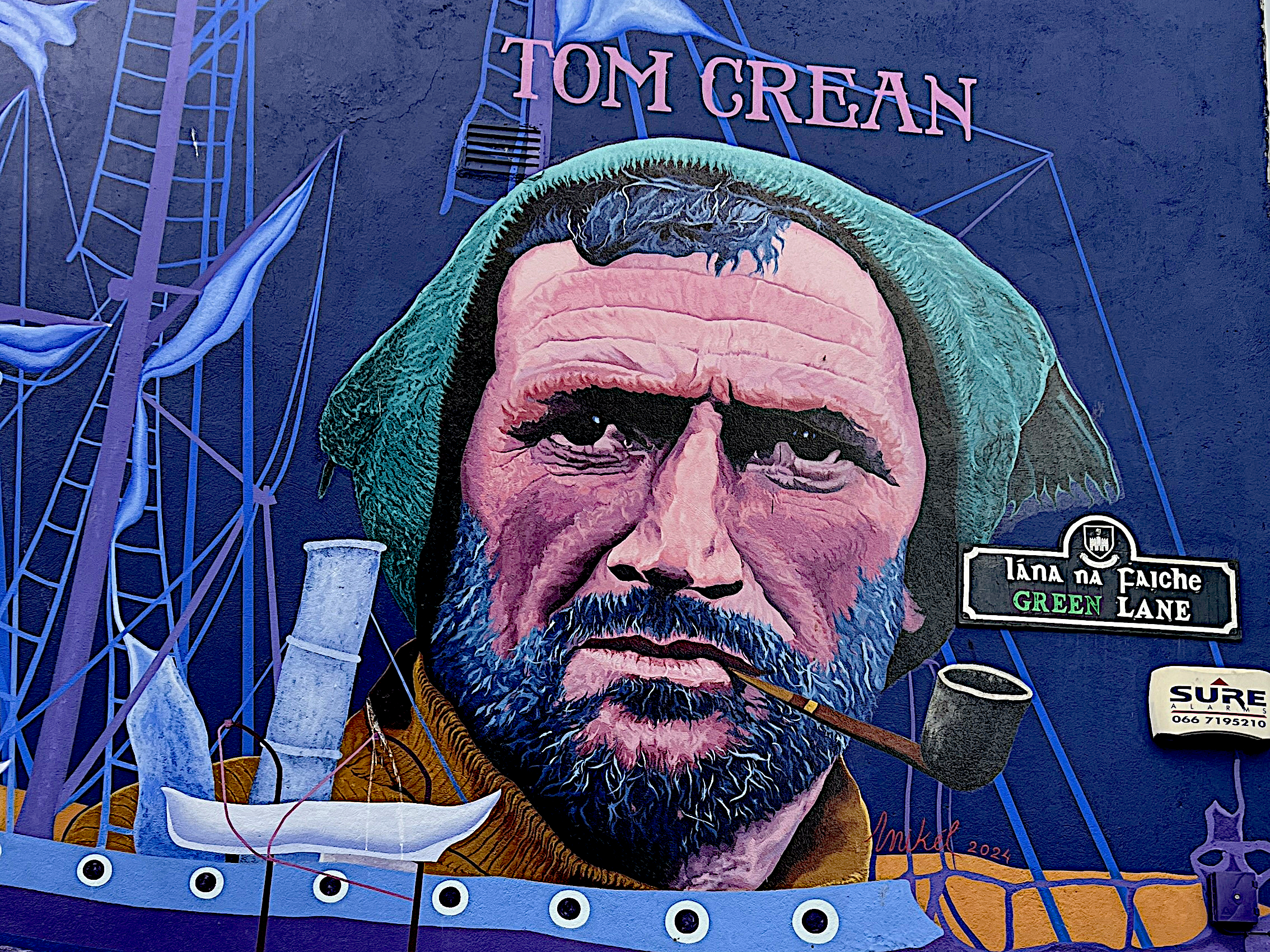
After the first week, shortly after Conor Pass, the weather changed rapidly. I stayed dry until Tralee, but then Ireland showed me its true colors: it was pouring rain. There was nowhere to find shelter – no roofs over houses or bus stops, just rain. In a small village, I finally found a gas station with a shop attached. Coffee! The owner was very friendly, as always, and patiently answered my questions. “No, this isn’t an early sign of the hurricane that’s expected, it’s just normal Irish weather,” she explained. Everyone knows everyone here. After three months of vacation, school is finally starting again – everyone is happy about that. In the past, children had to help out on the farms at home.
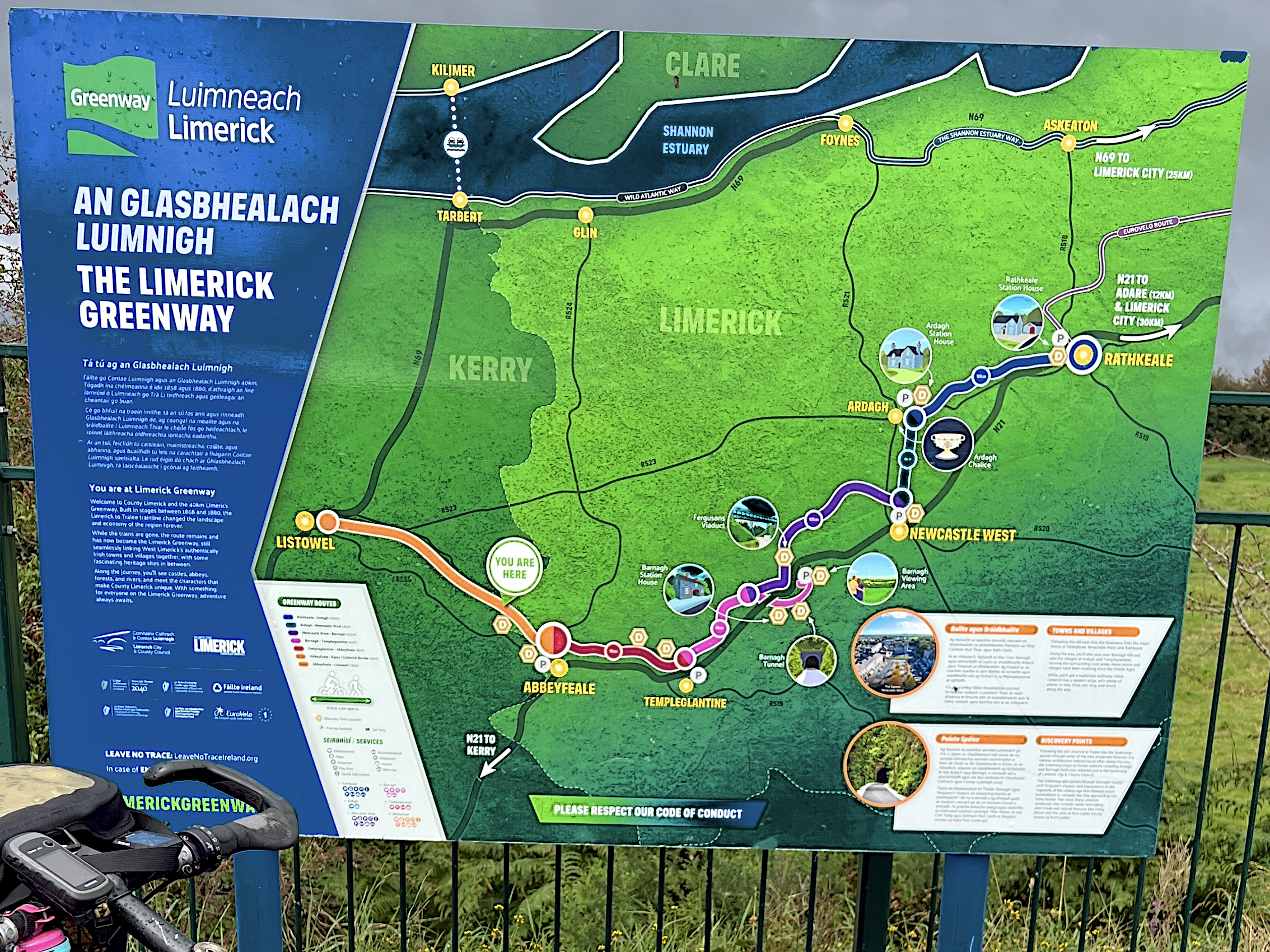
Shortly afterwards, the Limerick Greenway started, another cycle path on an old railway line. Over the entire 40 kilometers, I had hardly any opportunities to change direction. This is ideal for families with small children or beginners, but it always makes me feel claustrophobic. “Cycling between fences” is just not my thing. There were plenty of nice picnic spots along the way, but none of them had a roof. With the rain, that wasn’t exactly inviting.
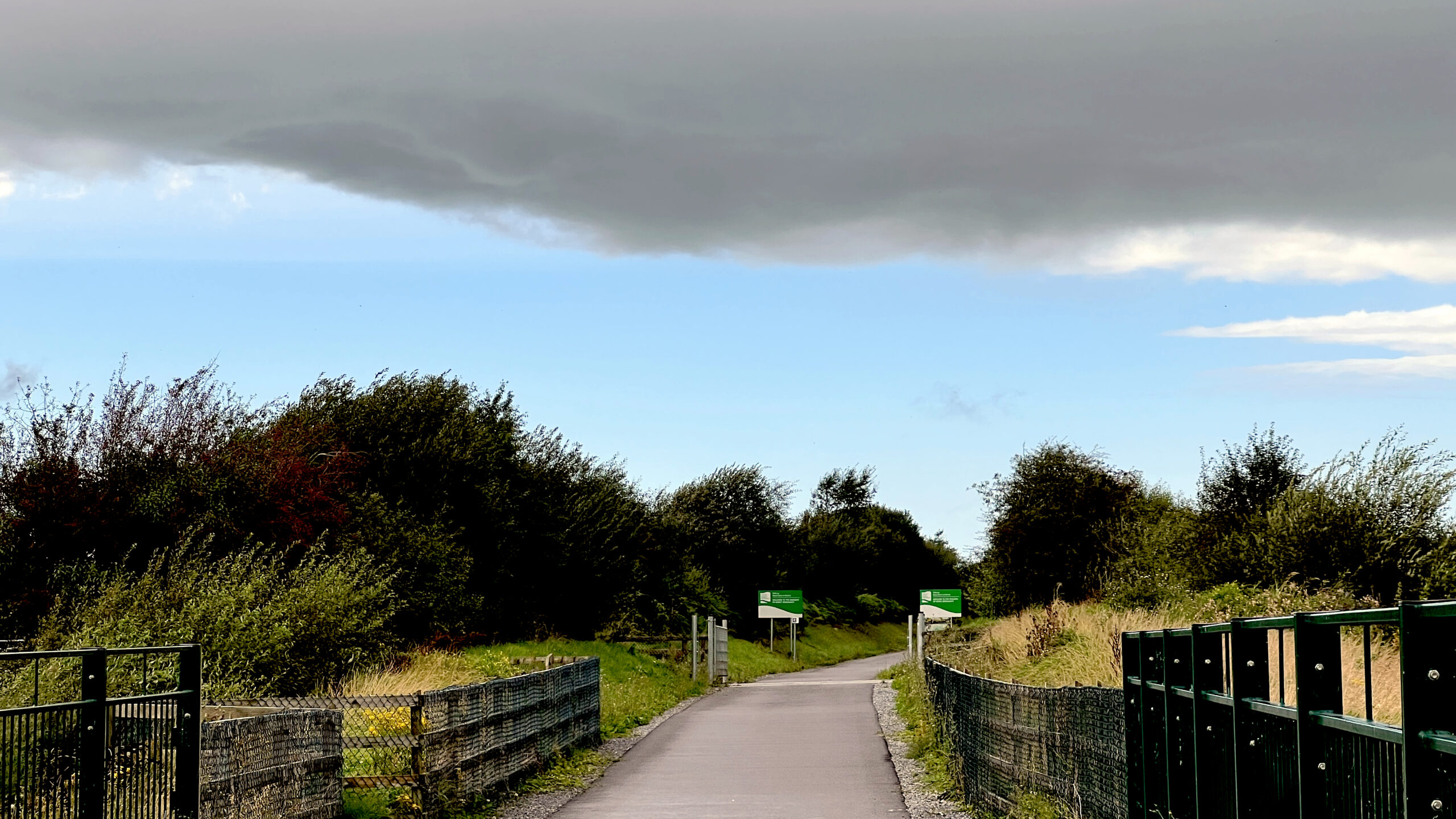
I didn’t have a chance to find a farmer to ask for permission to camp. So I waited until it got dark, quickly pitched my tent, and packed it up again the next morning before the first dog walker arrived. I had breakfast at the beginning (or end) of the greenway, where there were tables and benches as well as drinking water and toilets.
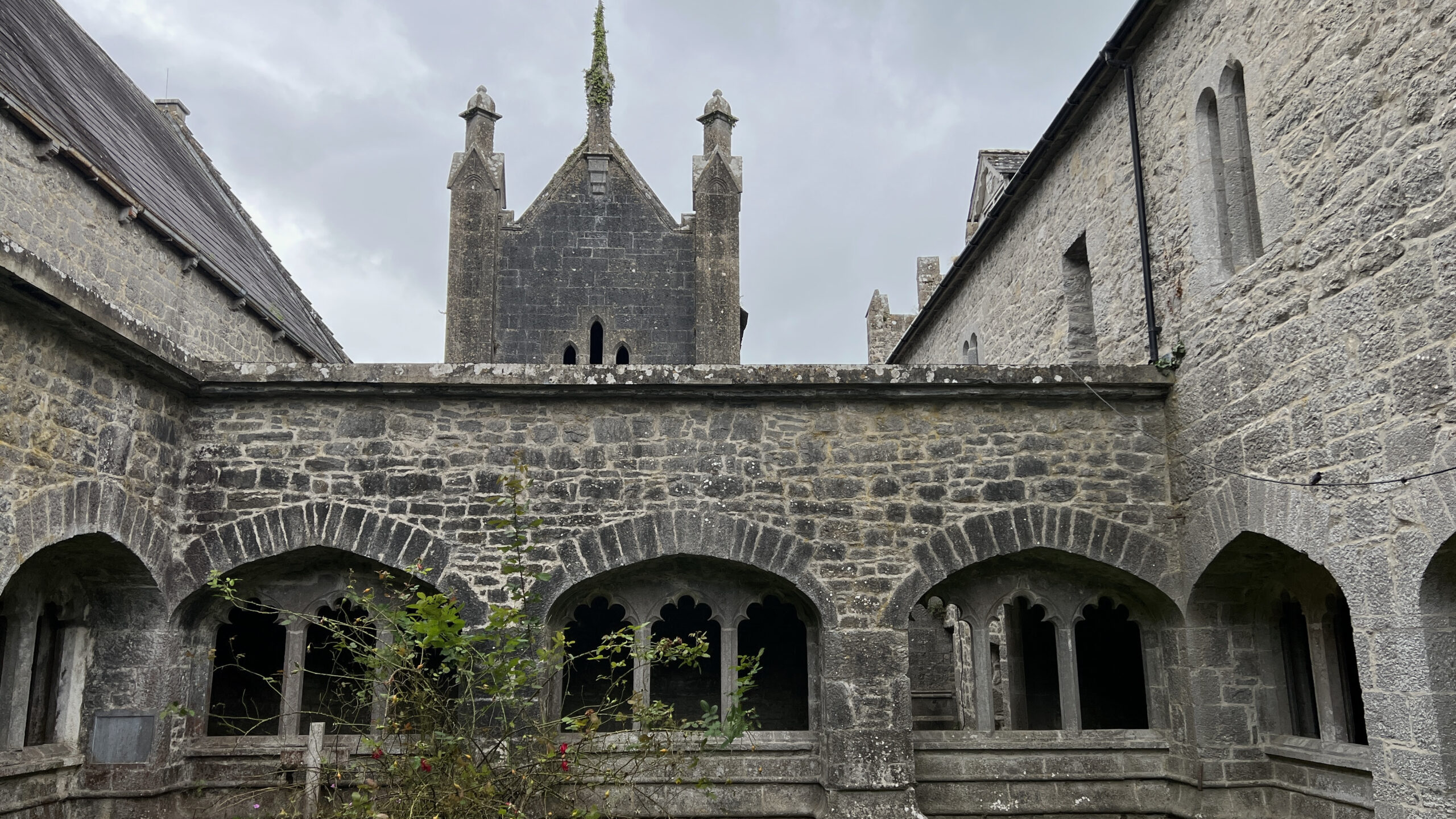
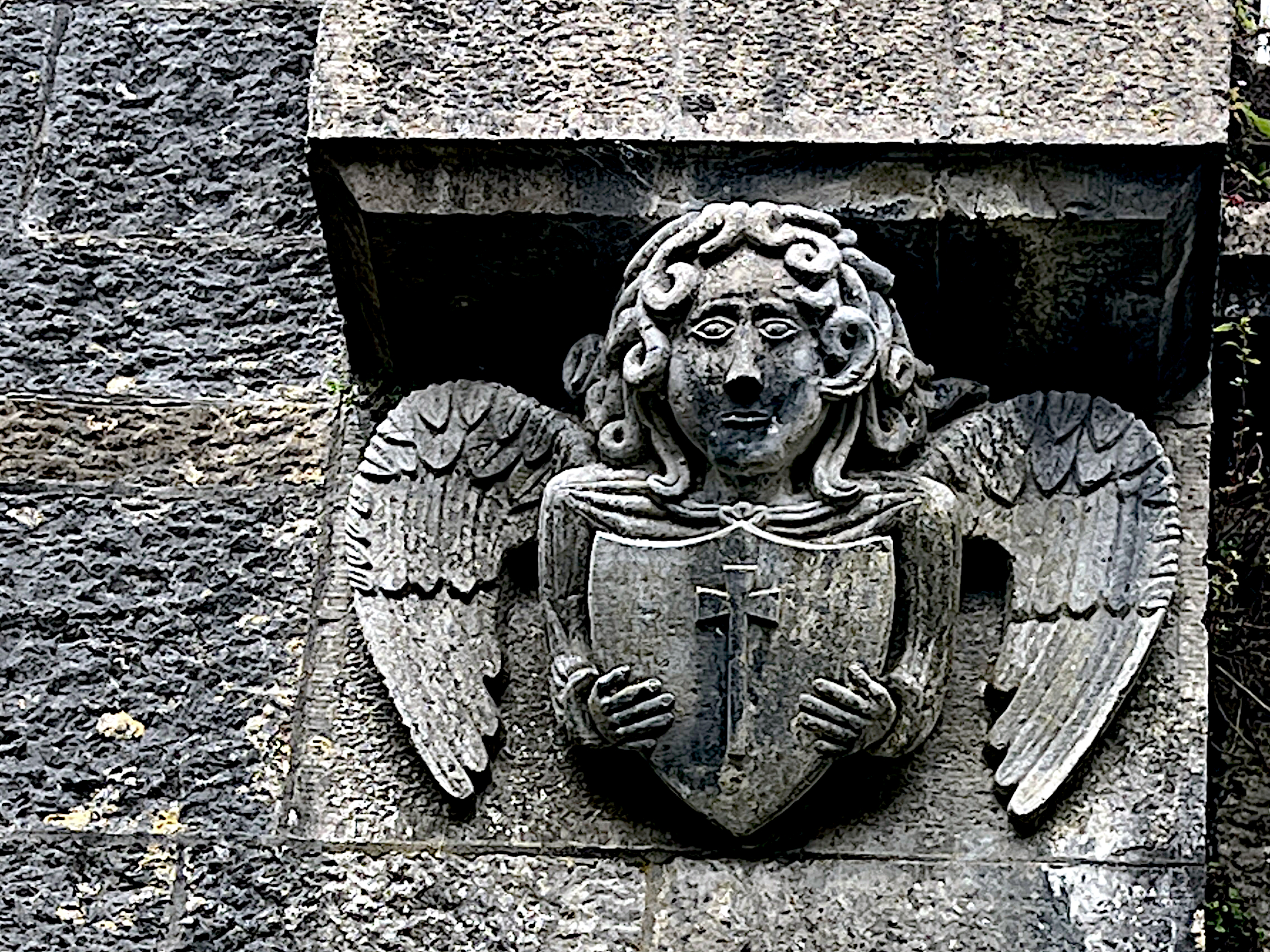
13th-century monastery in Adare
Just as I arrived in Limerick, it started raining again. That didn’t exactly make the city more attractive. After that, the sun alternated with rain. I was very tired again and asked the first farmer I met for a place to pitch my tent. “No problem,” he said, opening his gate to the pasture. How happy I was that I didn’t have to wait until dark today! After finding a spot that wasn’t too muddy, I set up my tent to get it dry. Unfortunately, it was only then that I noticed that there was a railroad track nearby and an airport not far away.
Burren Road, campsite, and Irish hospitality
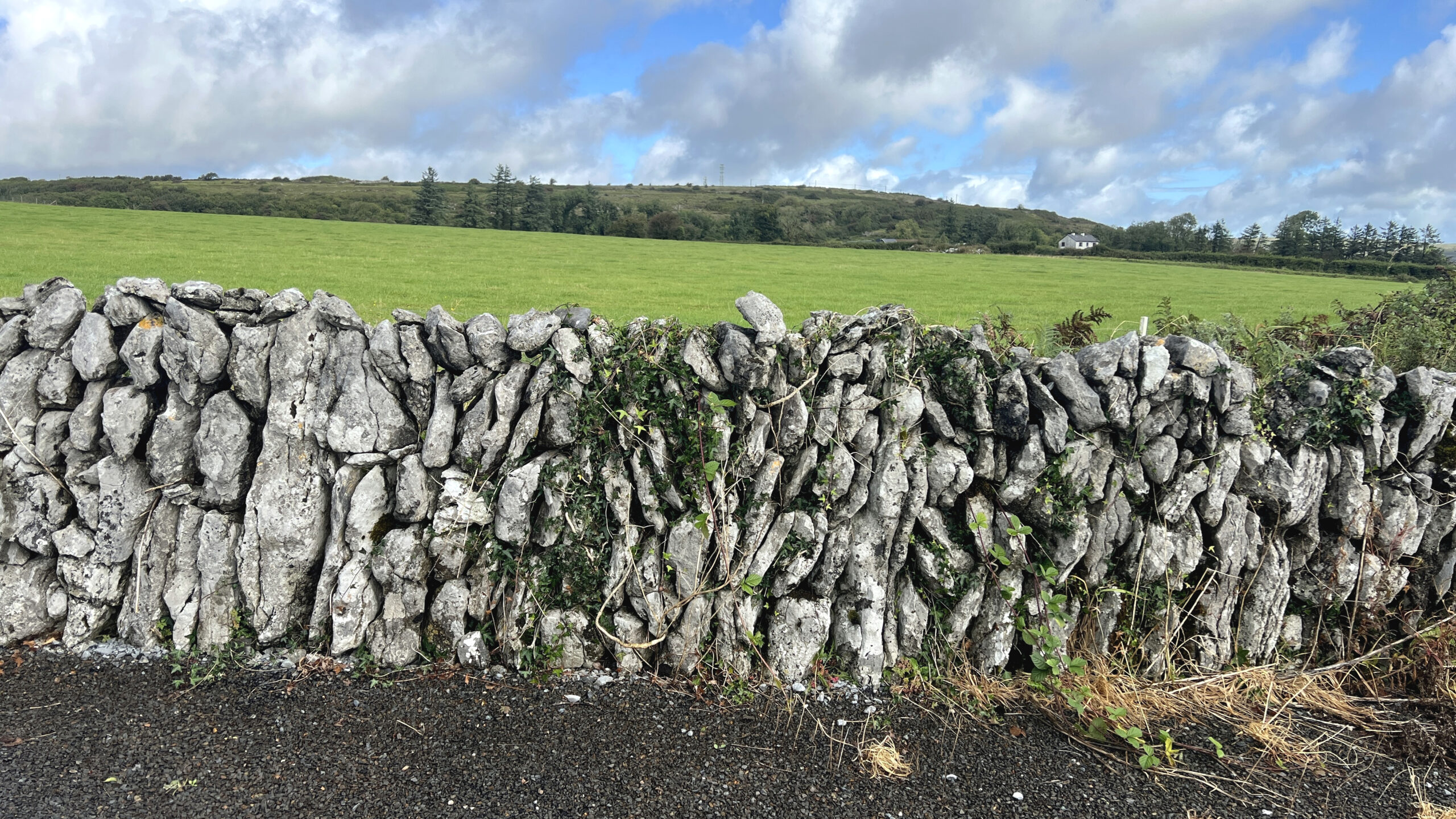
There was a bit of sun in the morning. I dried the tent a little. However, the weather forecast for the rest of the day was not promising. I decided not to ride around the entire peninsula, but to take a shortcut on Burren Road, which leads through a national geopark. At first, however, I couldn’t see any of it.
Around lunchtime, I passed through Corofin and saw a sign for a campground. A few meters further on, I stopped. A campground? I quickly looked it up online: only good reviews and a special price for cyclists and hikers. Let’s go! A hot shower and nice conversation in the dry, warm camp kitchen – what more can you ask for? The campground was in the middle of the village, with two small supermarkets just around the corner. Otherwise, there was nothing going on.
The next morning, I decided that if my tent was dry by 10 a.m., I would continue on my way. Of course, it wasn’t! So I spent a rest day in the camp kitchen and in the shower. During the short breaks when it stopped pouring, I went shopping. The weather forecast for the next few days didn’t look any better. However, I was lucky because I was able to pack up my tent almost dry in the morning before it started raining again.
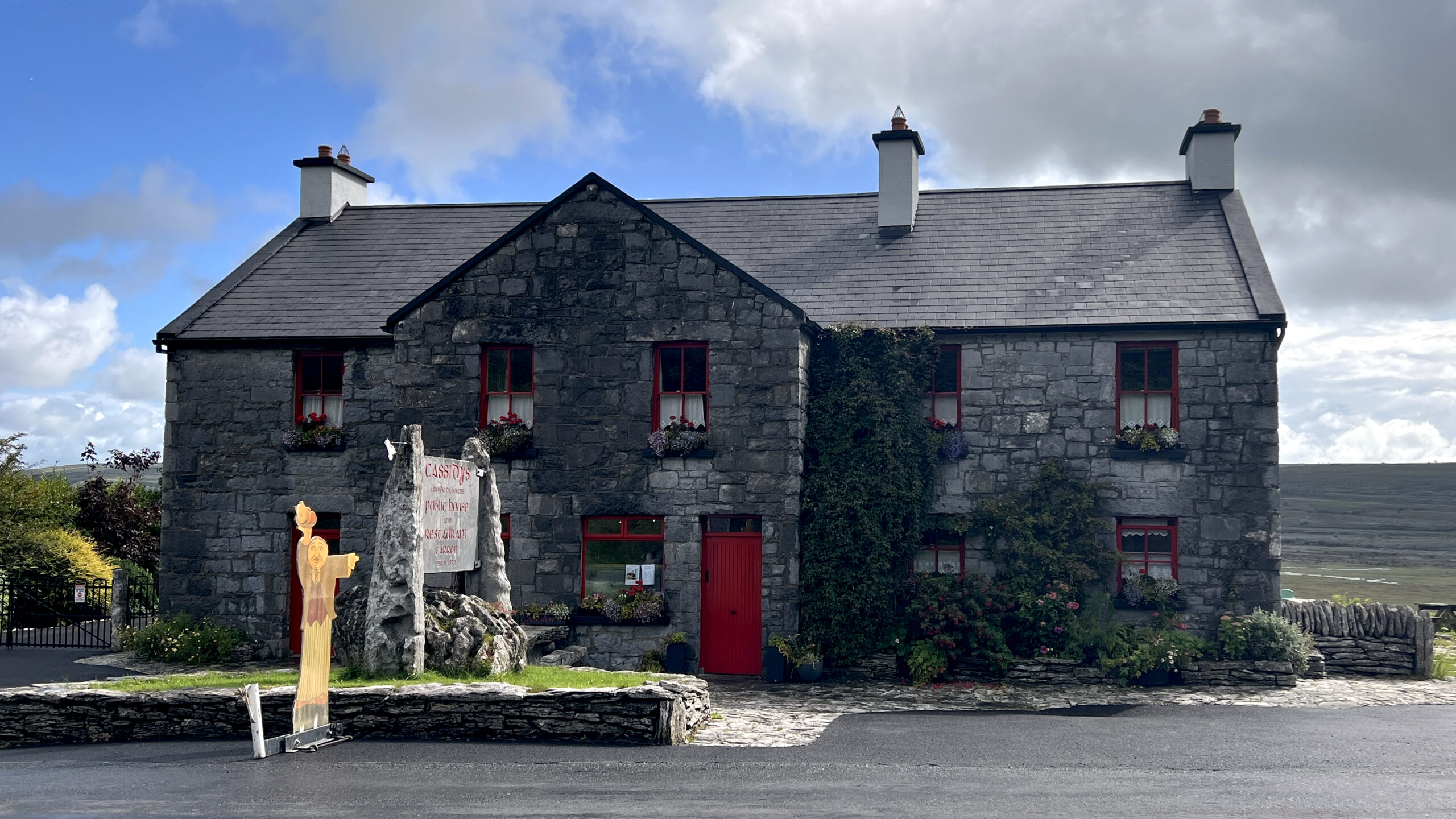
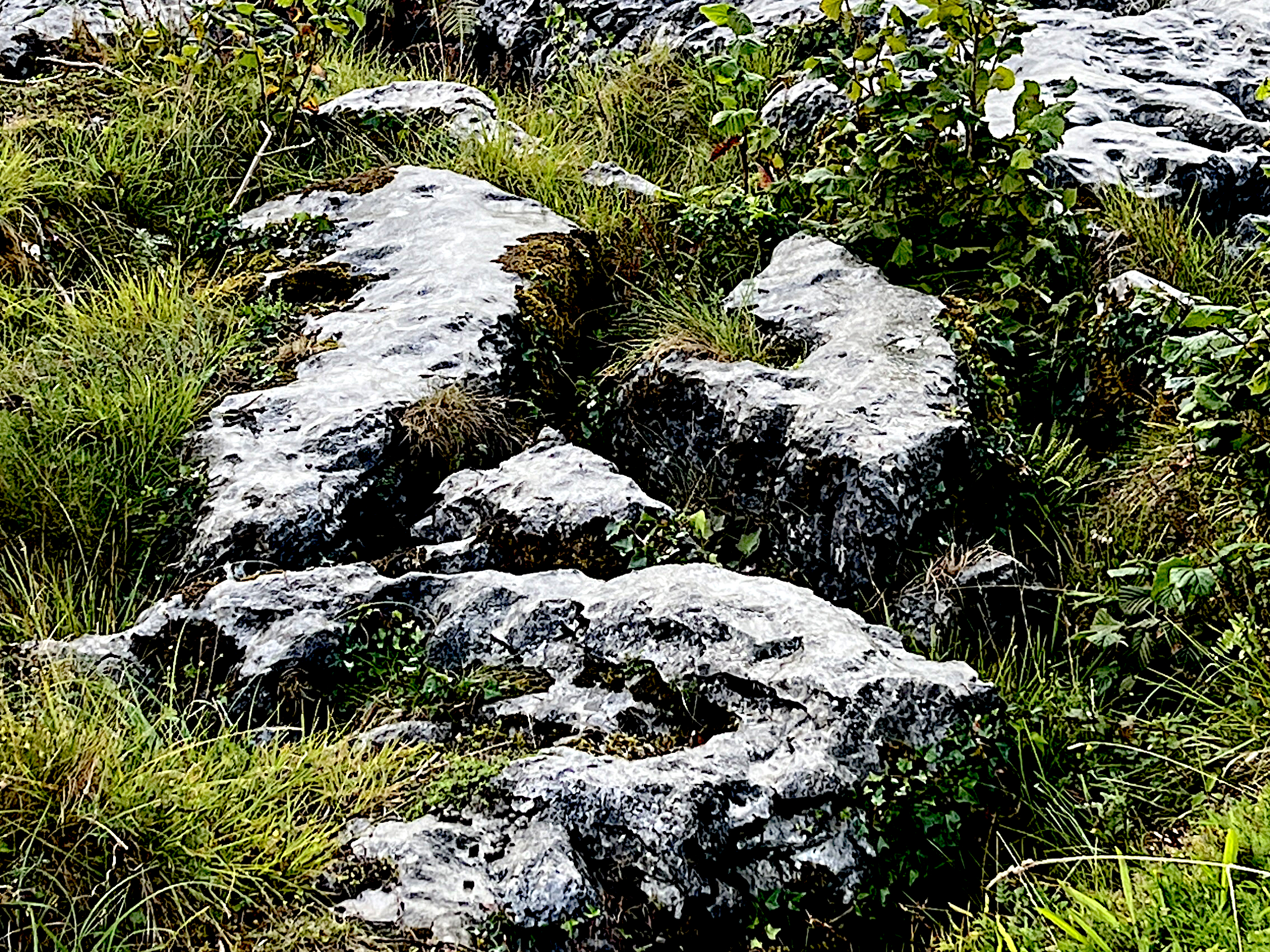
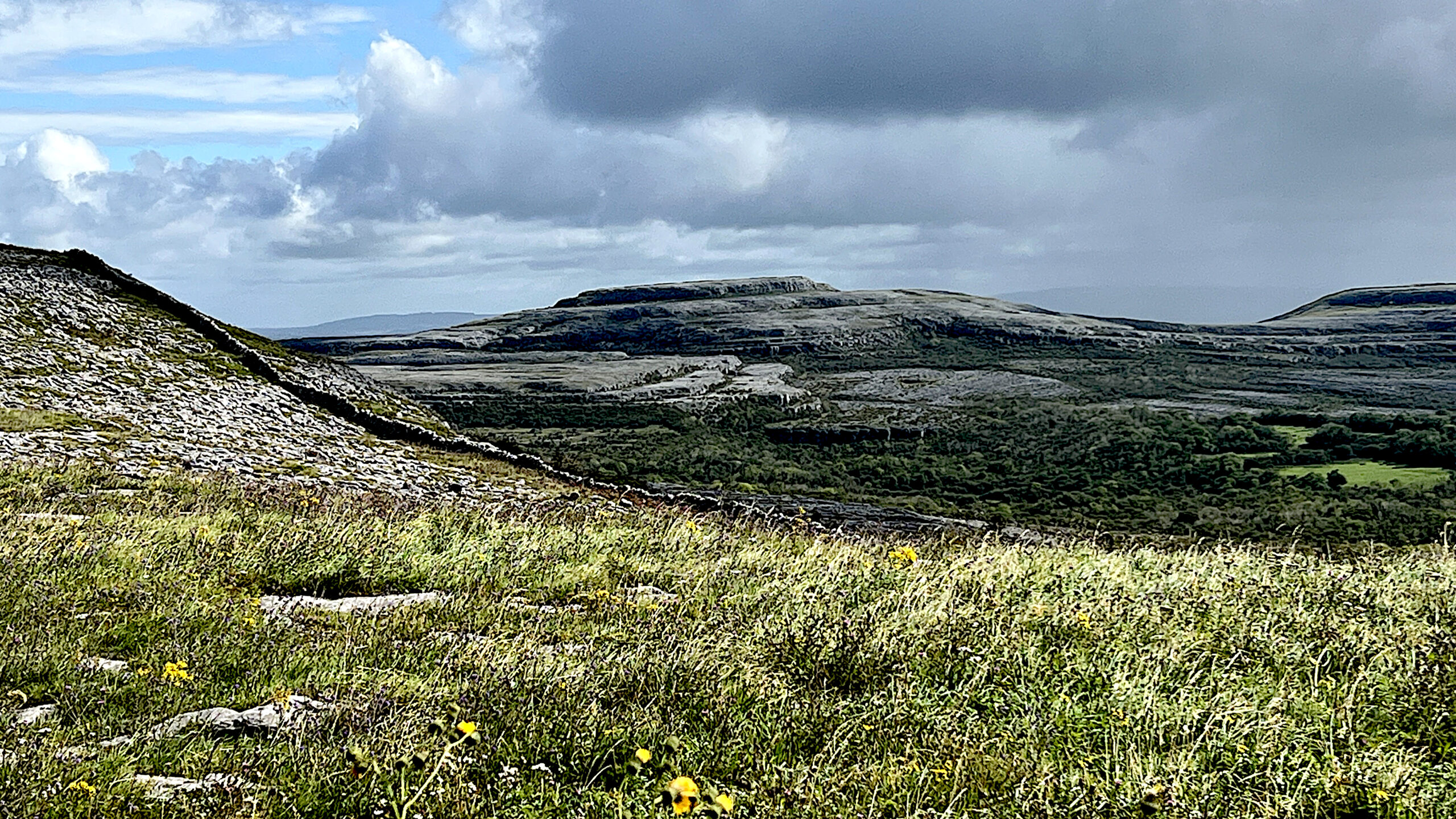
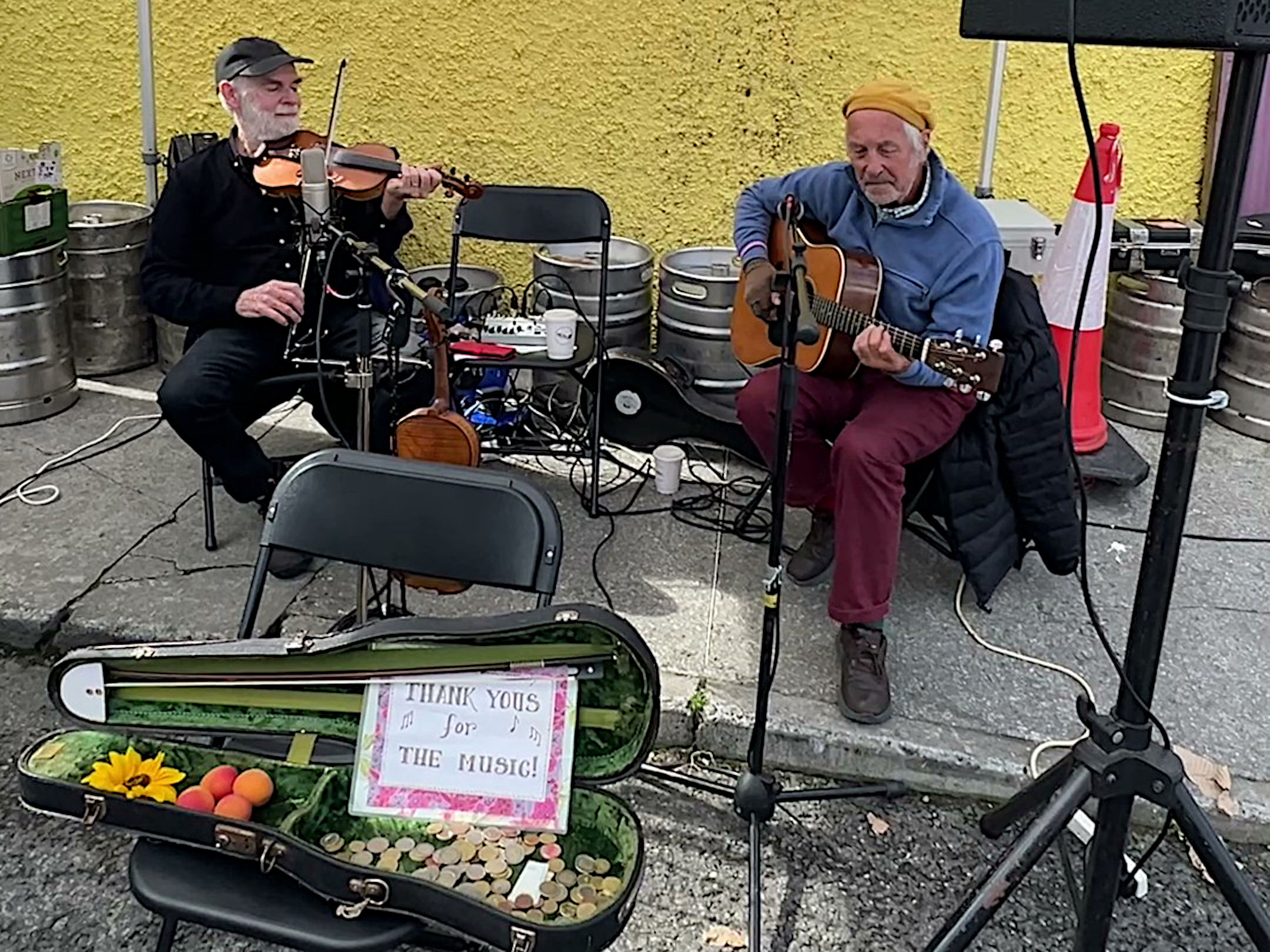
Now I finally saw something of the Geo-Park: wonderful rock formations and lakes. During the breaks in between rain showers, I was able to really enjoy the ride. Then I was back at the sea. There was a farmers’ market in Kinvara. It wasn’t even raining! Finally, I heard a real Irish music group and got something delicious to eat—a dish with spinach and lots of garlic.
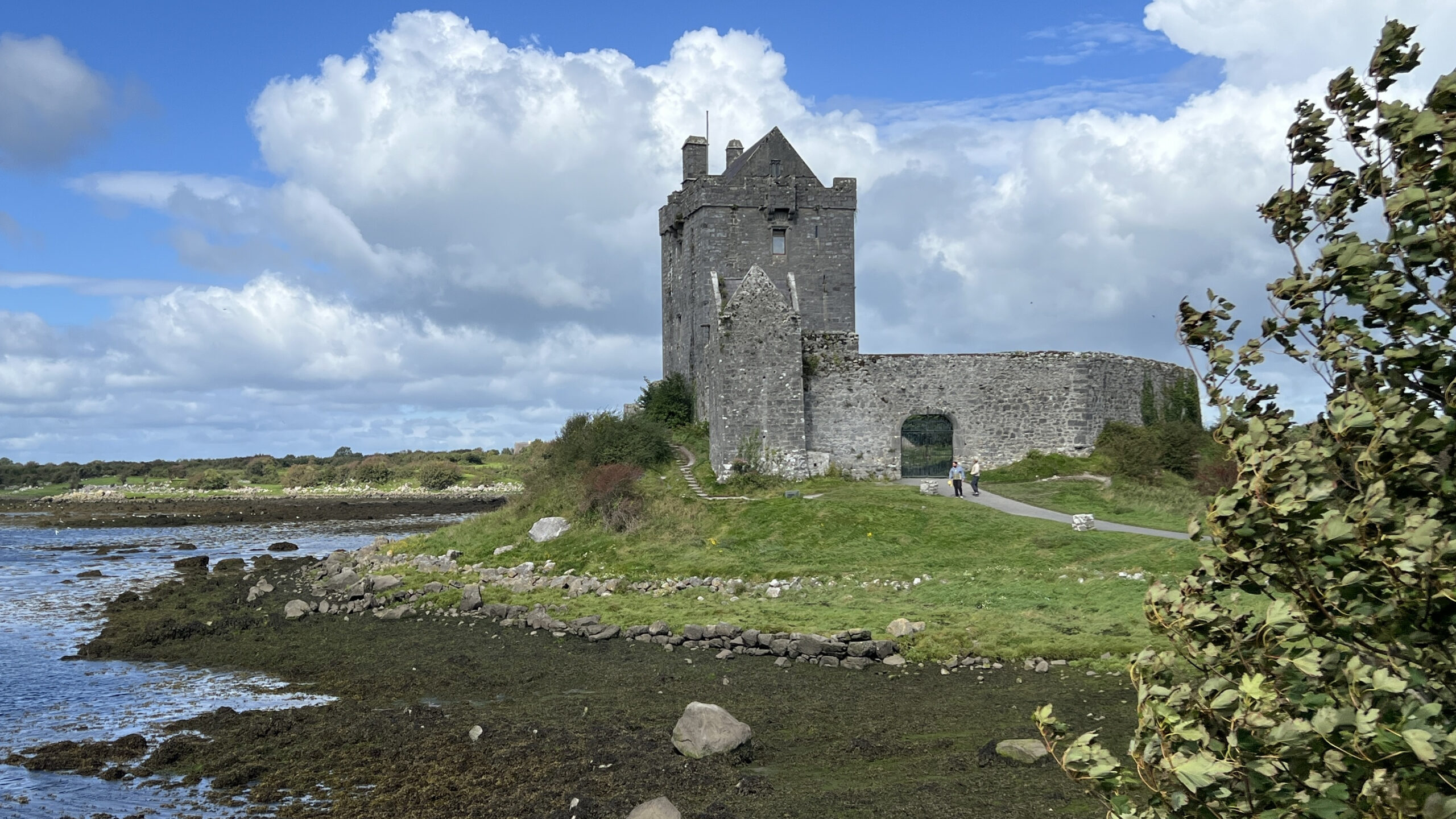
Continuing through Galway, I stayed on EuroVelo 1 – unfortunately. Leaving Galway, the cycle path leads up the mountain on a very narrow road. Cars couldn’t pass each other. It was amazing how they maneuvered back and forth. I stopped at a driveway and waited a long time before I could continue.
After that, there were only fancy houses. It didn’t look like farmers lived here. Finally, I asked a woman who was walking towards me where I could camp. “Maybe in my garden,” she replied immediately. That turned out to be one of the most valuable experiences of my trip. She was about my age, and we got along well from the start, shared the same sense of humor, and laughed a lot. What a wonderful evening! It goes without saying that I was also treated to a delicious meal. And she is married to a German—another surprising connection.
Sturm and Tinwhistle

Despite the weather, I continued my journey the next day. The rain eased off, but it was stormy. My motto is always: I’m here to enjoy myself, not to torture myself. I didn’t cycle around the next peninsula either, but crossed it instead. I preferred to climb a few hills rather than struggle against kilometres of headwind.
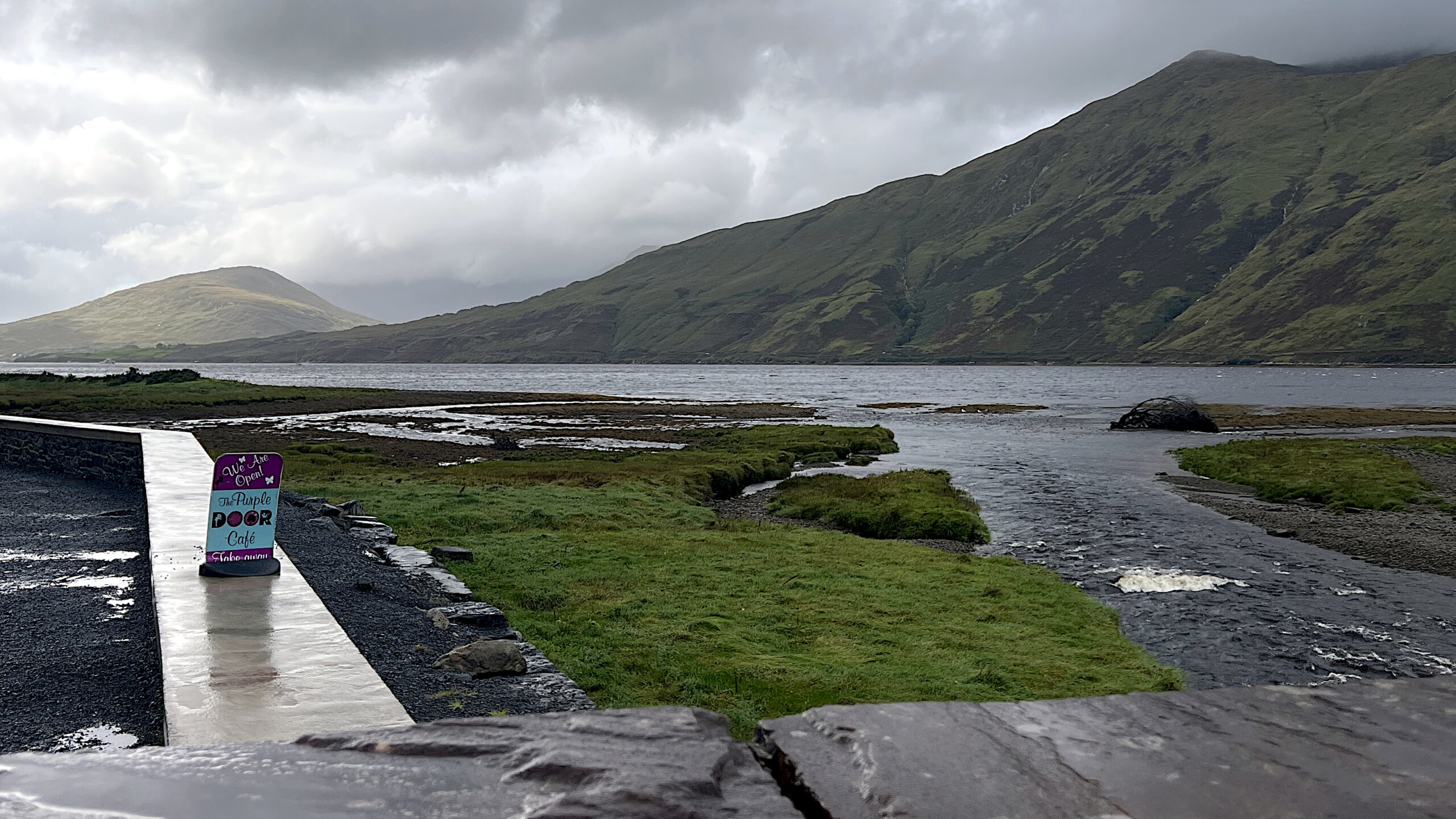
It was wonderful: no people, vast empty landscapes, and lots of lakes. On the other side of the peninsula, I stayed on the N57, which was very quiet here—perhaps because of the weather. Then I headed down to Killary Fjord, a popular destination—just not in this weather. In Leenaun, I finally found shelter and was able to take a short break. Needless to say, I preferred to stay on the N57 rather than cycle against the wind again.
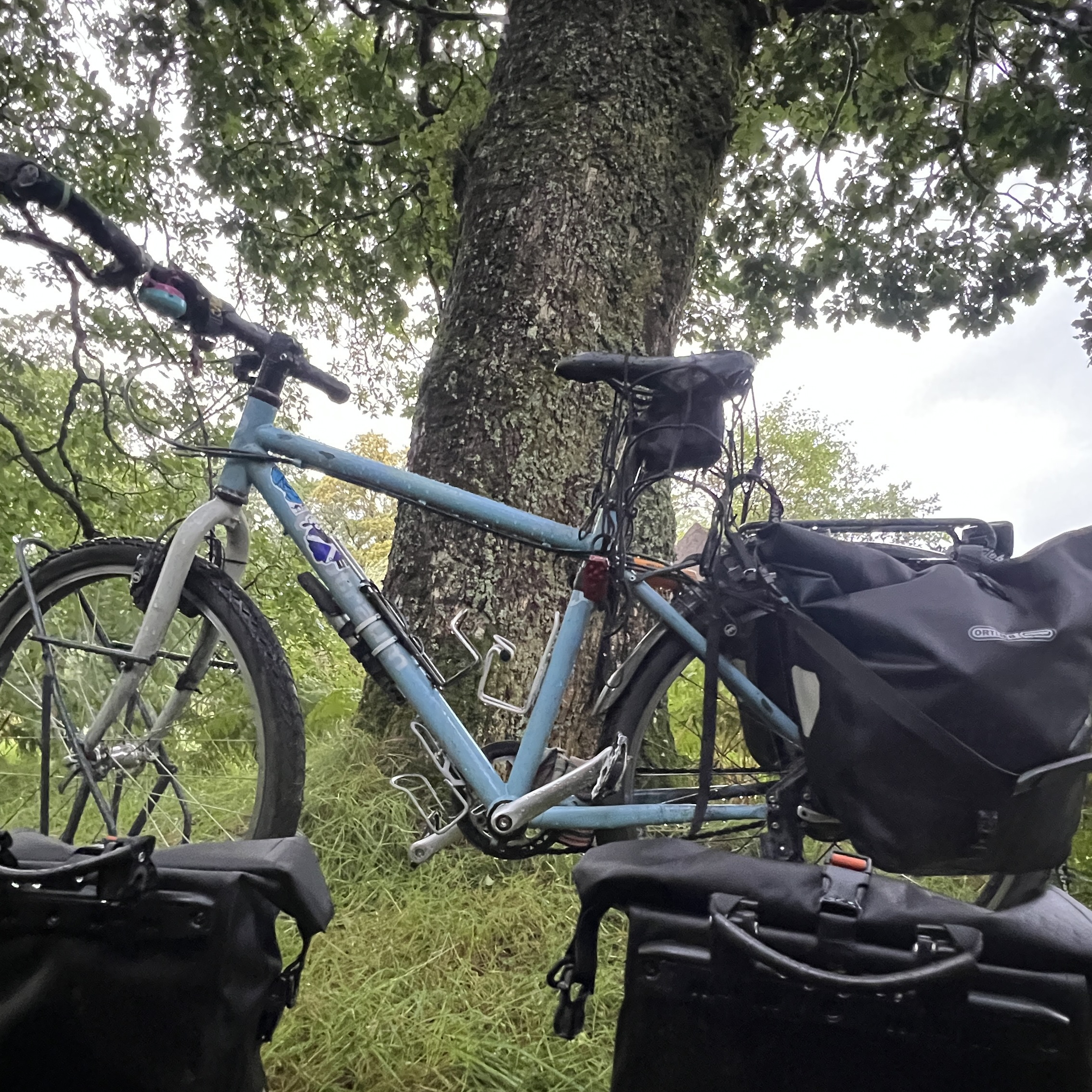
I found a shelter in a small forest where I could pitch my tent – once again, camping in the wild. The next day was also rainy and windy. First, I cycled to Westport for a coffee – a ritual I had now developed. Then I took a short greenway to Newport. This time, I accepted having to cycle between fences because the road was unpleasant.
Two motorcyclists asked me where I was going. “I go where the wind blows,” I replied. Instead of riding around the peninsula against the wind, I preferred to ride straight through. I was lucky: there was a campground in Ballina, again with a special price for cyclists and hikers. Better a hot shower and a camp kitchen than sinking into self-pity because of the rain.
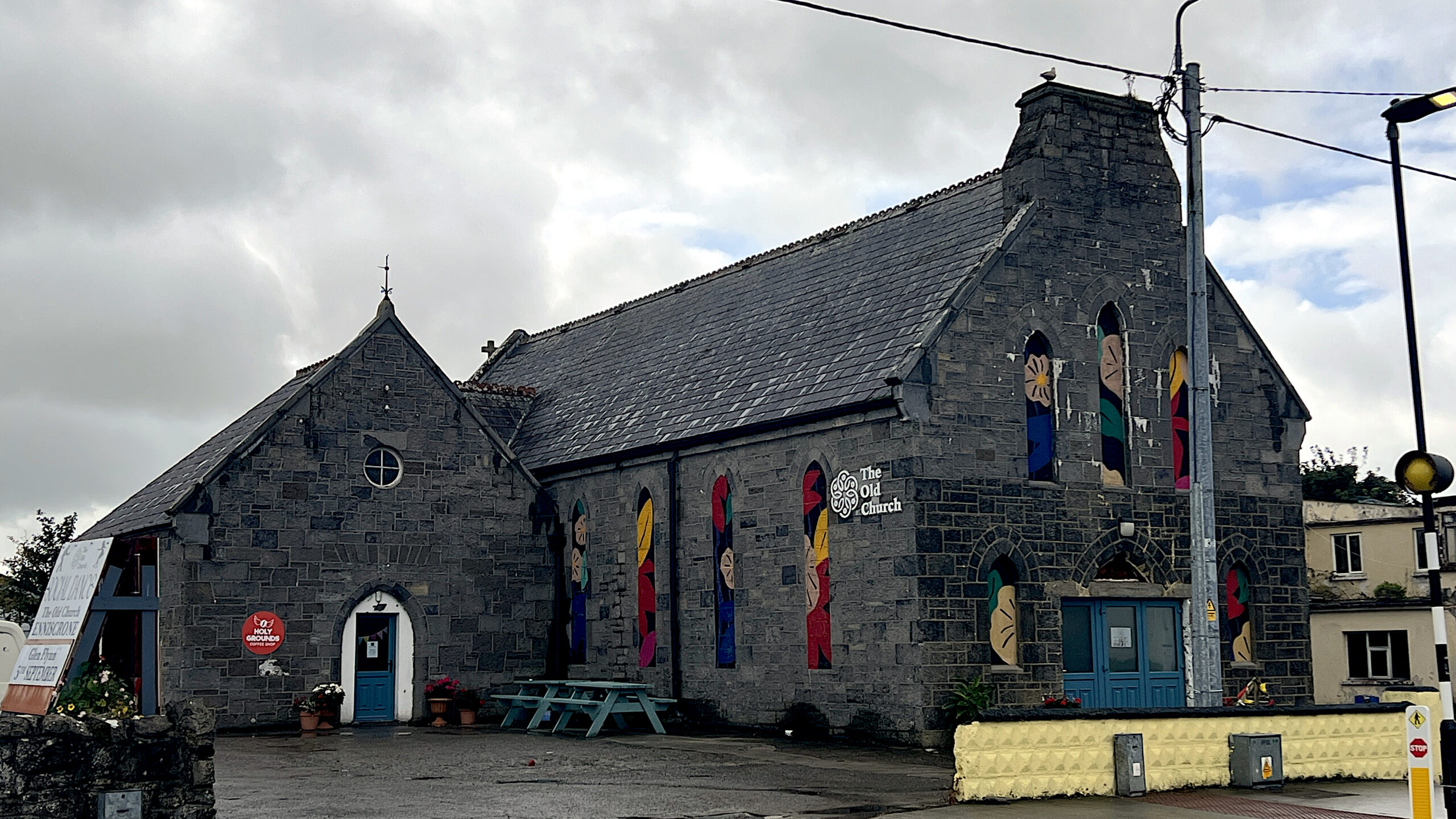
Since I had cut corners so much in the last few days, I decided to stay on EuroVelo 1 (EV1) for now. That was a challenge. Maybe I’m not the right touring cyclist for it. I don’t understand the large loops in the route—I don’t know what the planners were thinking. There were picnic areas here and there, but even these were not covered.
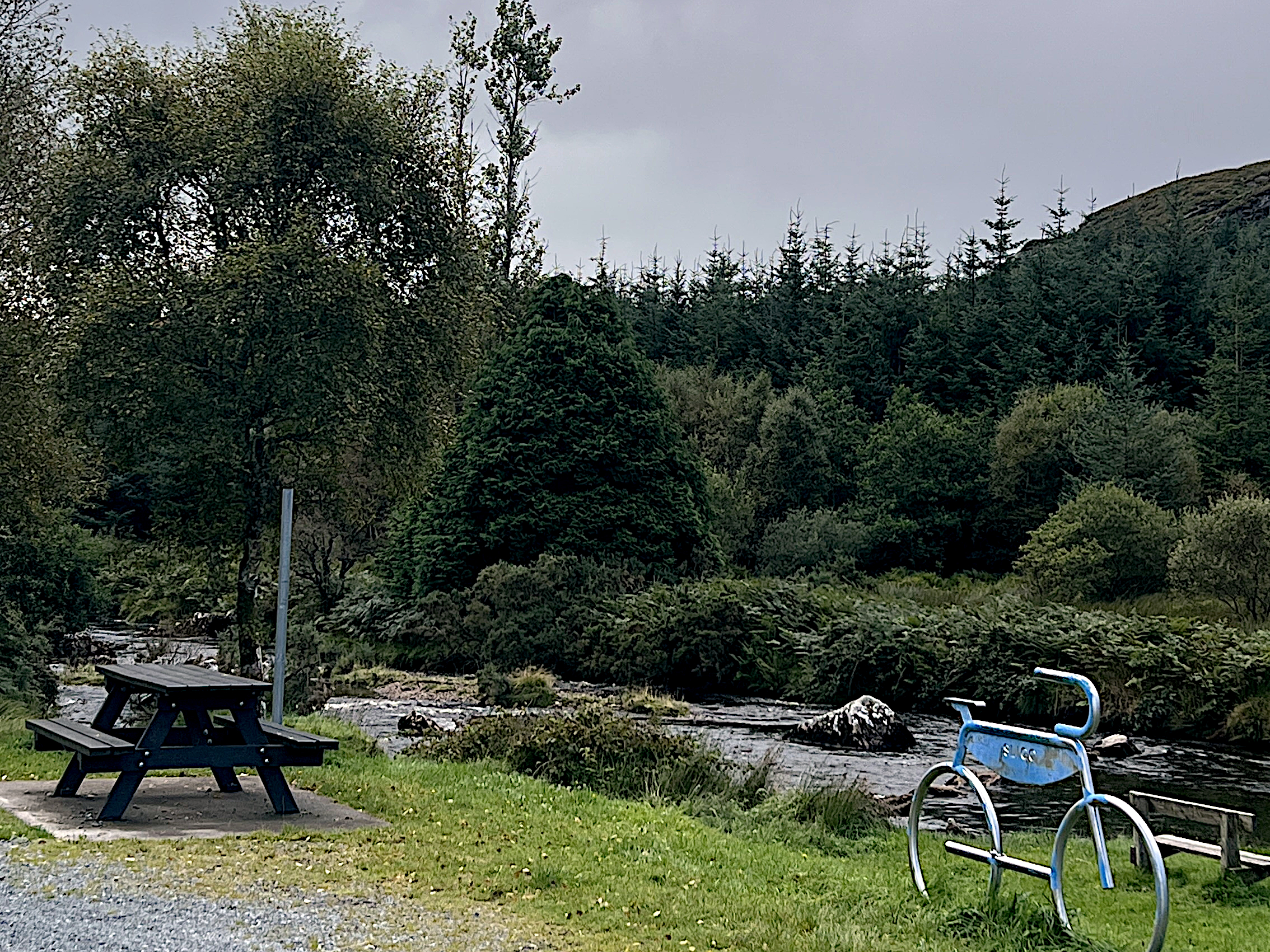
On the larger roads, there were at least occasional gas stations where I could get coffee.
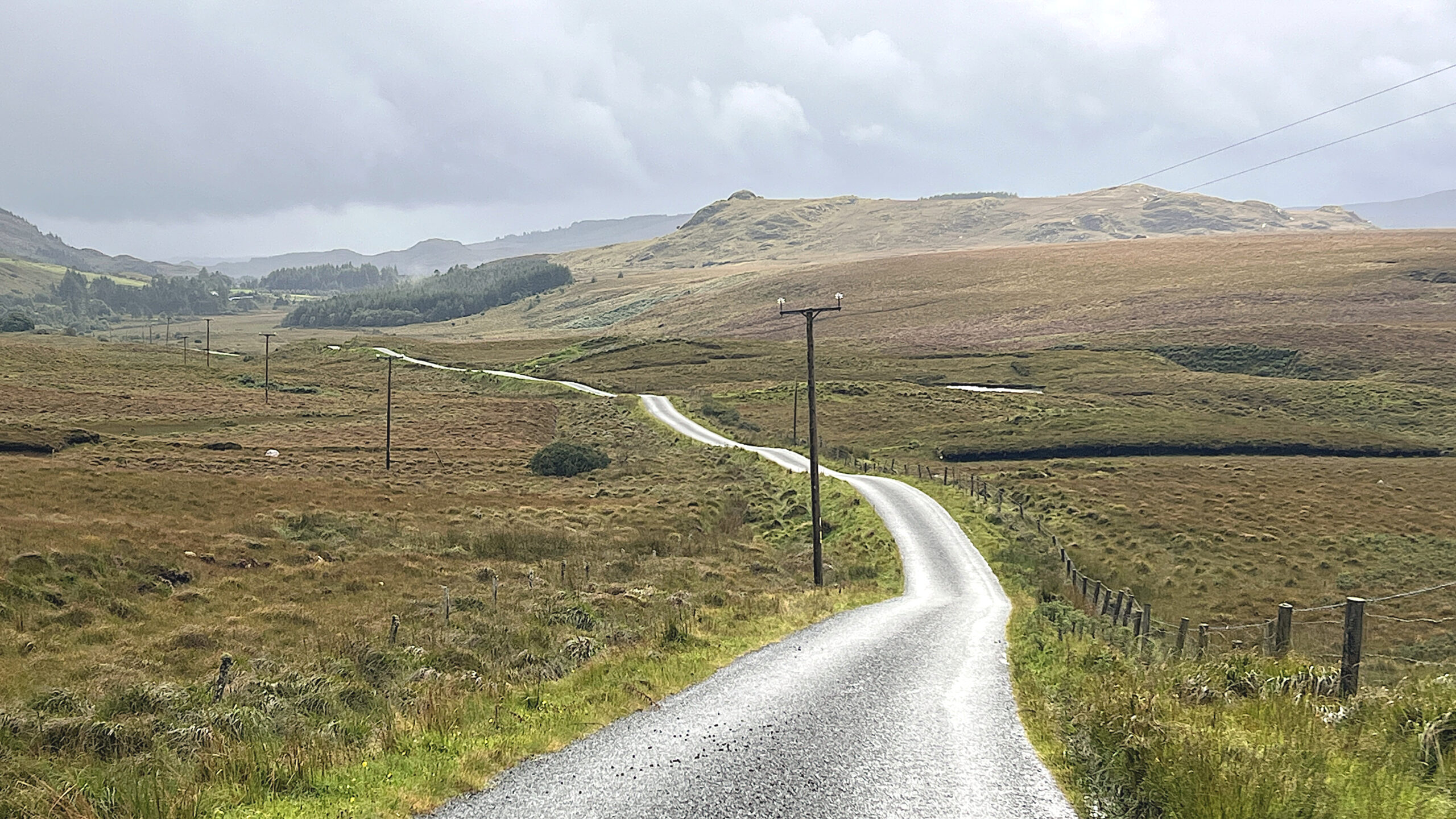
It went through a forest and onto an open area, similar to the Ring of Kerry.
It was getting time to find a place to sleep. But where? Too muddy down at the bottom, too windy up at the top. Just keep going. Finally, I ended up in a place with all kinds of junk, but with the owner’s permission to pitch my tent somewhere. Finally out of my wet, cold shoes!
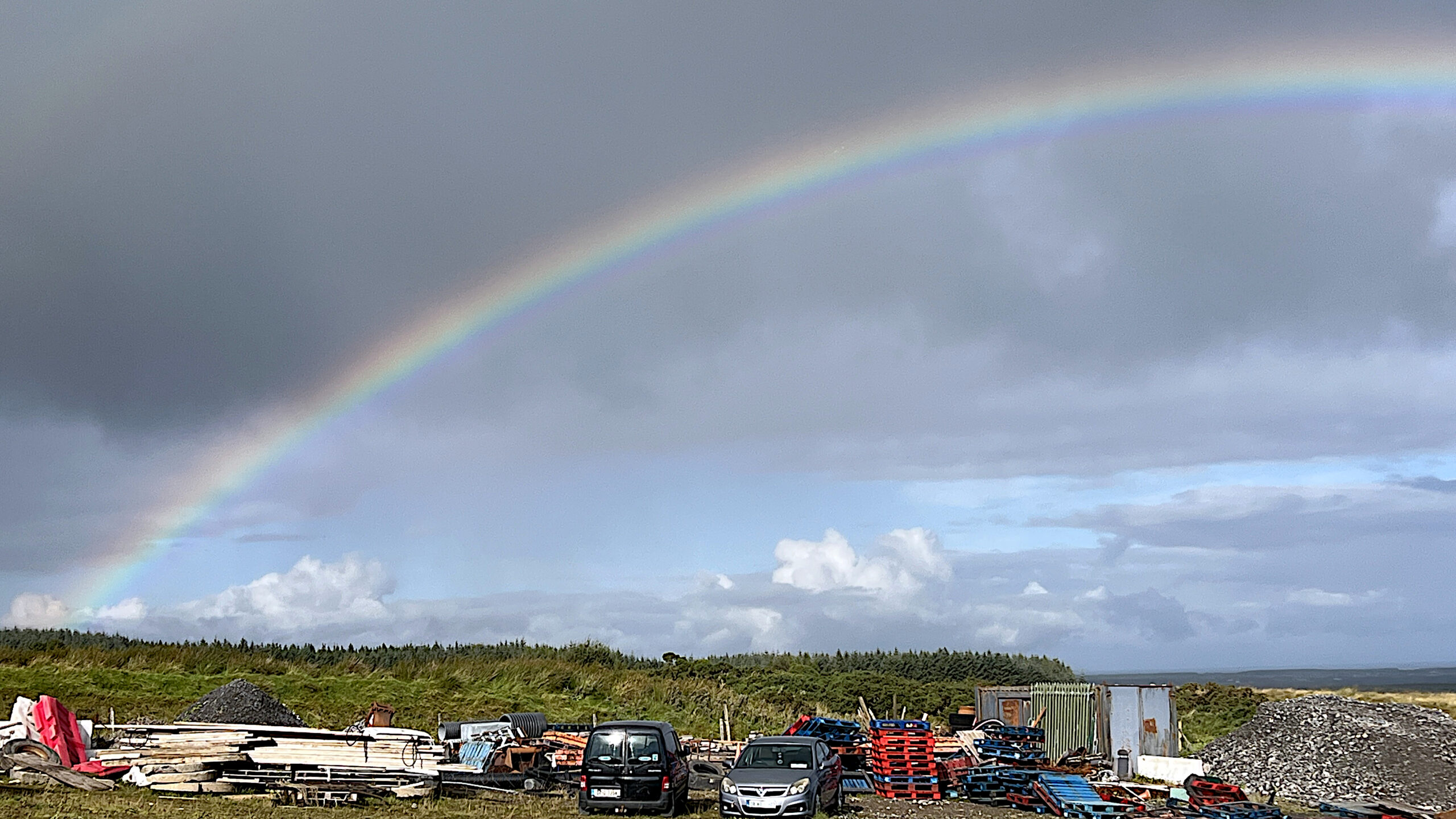
At least the next day started well: sunshine! A rainbow across the sky. When I set off, it was raining again. I only stayed on the EV1 out of curiosity: why do thousands of cyclists ride here? They don’t have to. After 40 kilometers, I finally reached another town and was able to drink coffee. I didn’t leave the EV1 until just before Sligo because I wanted to go into town to buy a tin whistle (flute). That made me a little happier. Continuing on the EV1, on a small road in rush hour traffic – annoying! Then back to a peninsula.
I asked a man who was trimming his hedge where I could camp. “Just go down there, you’ll be at the beach in five minutes, there are already caravans there.” Of course, it took longer than five minutes. I became impatient again. My curiosity drove me on. Was there more to come? Indeed: a beautiful bay.
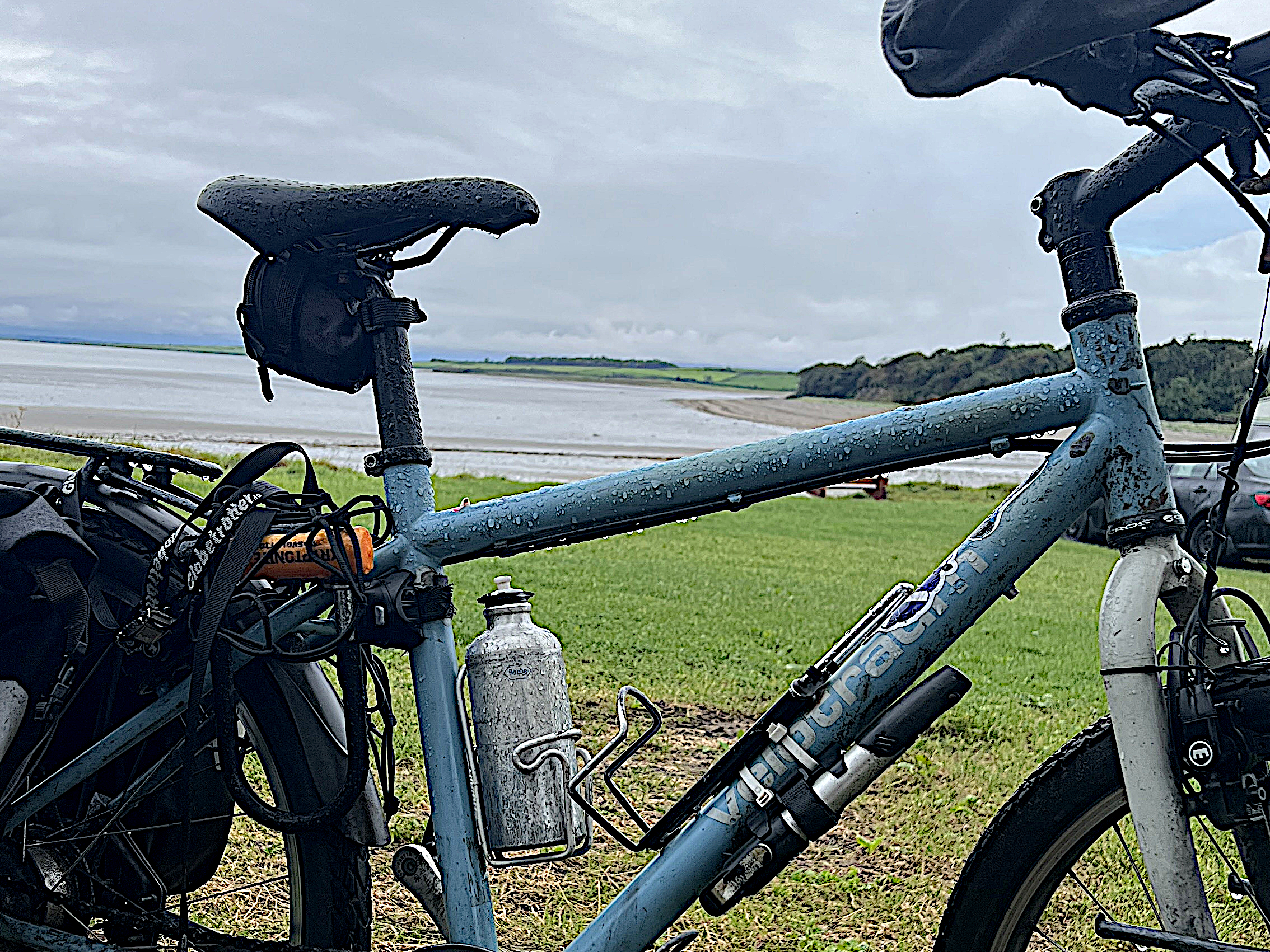
There were four caravans, but they didn’t look like they had just arrived today. No people around. I found a reasonably dry spot, pitched my tent, and tested my new tinwhistle.
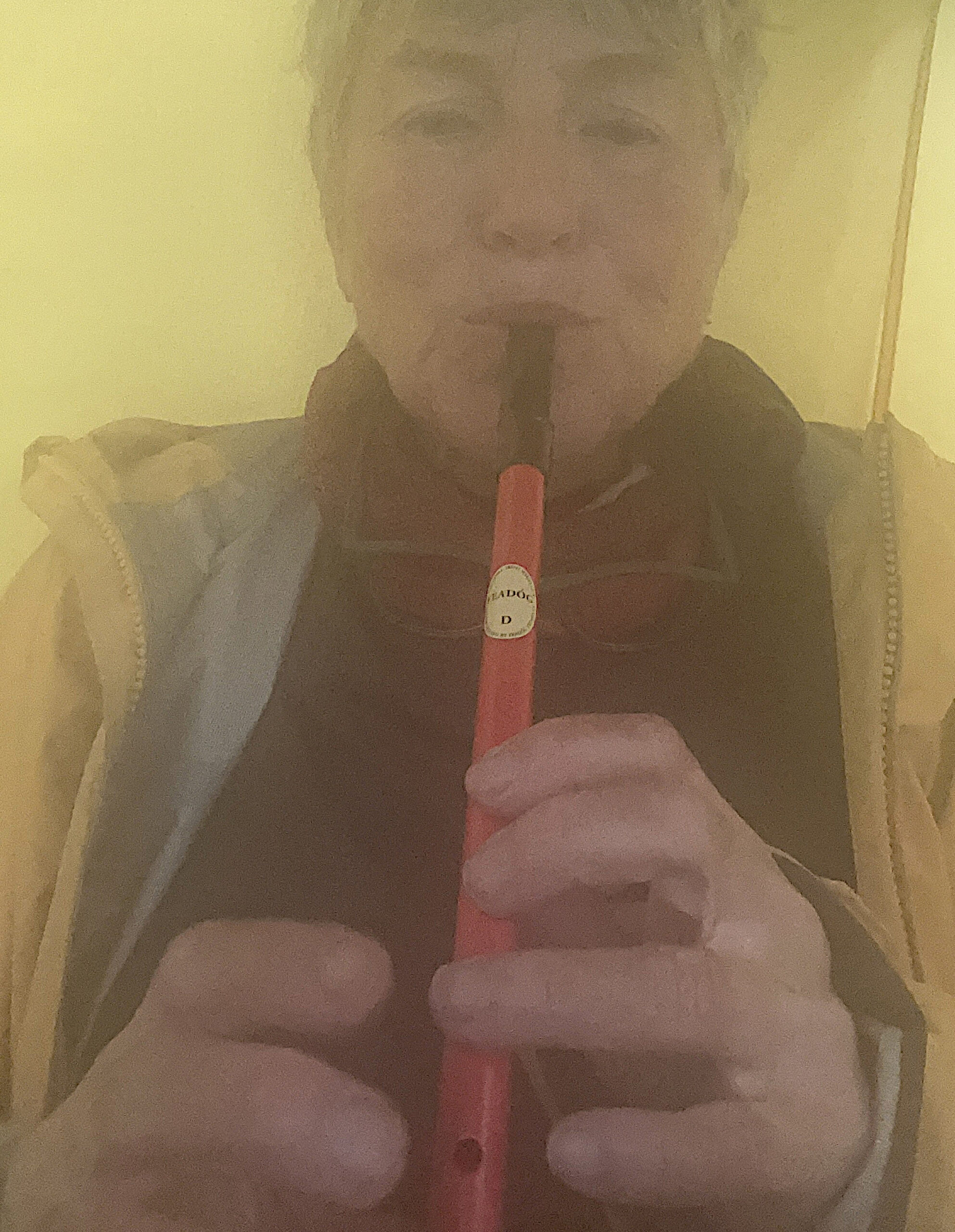
I only noticed people in the trailers out of the corner of my eye. One went to work in the morning wearing a suit and tie, another has been living here for months. Housing is also very short and expensive here.
Donegal, Northern Ireland, and the invisible border
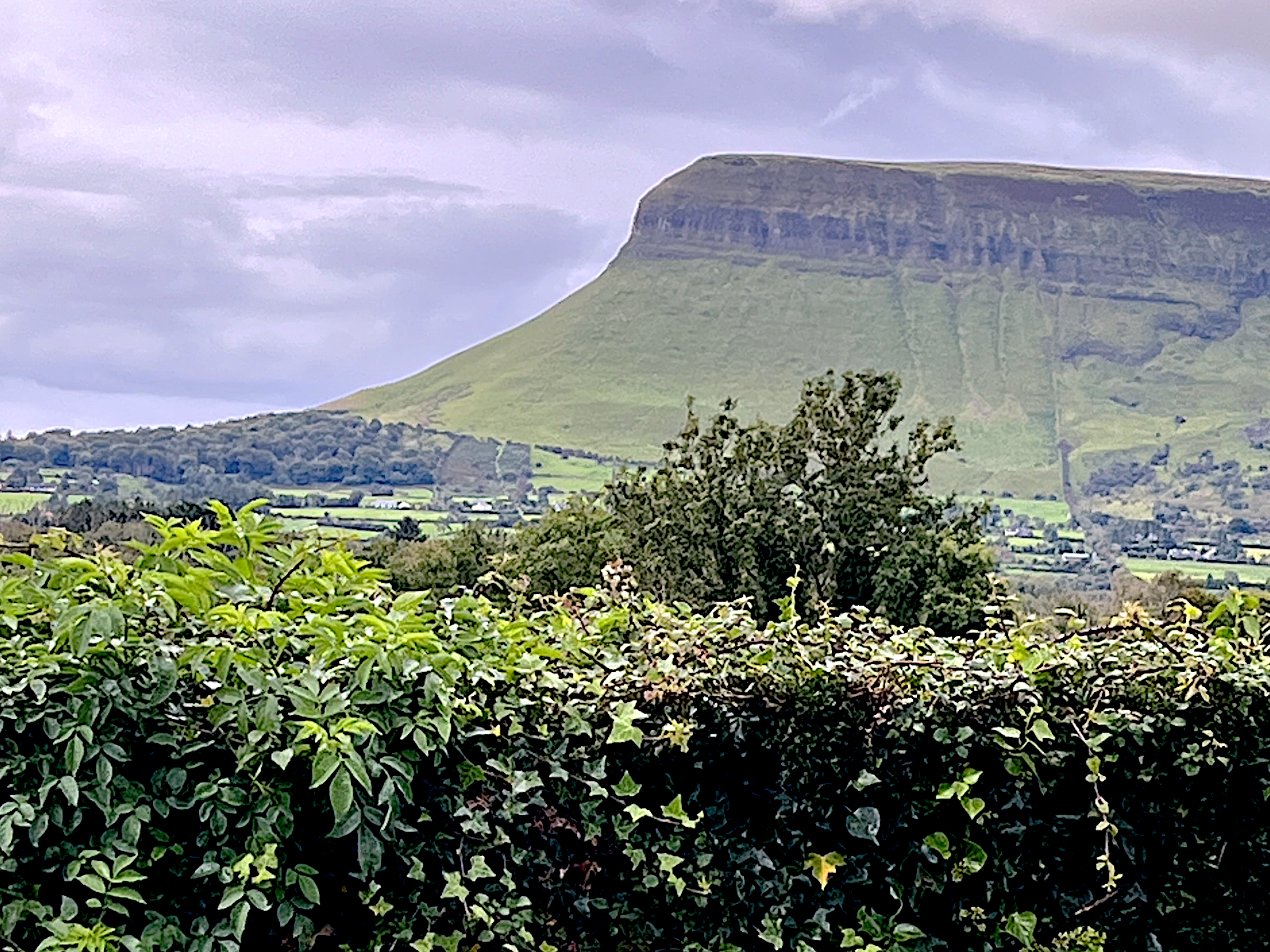
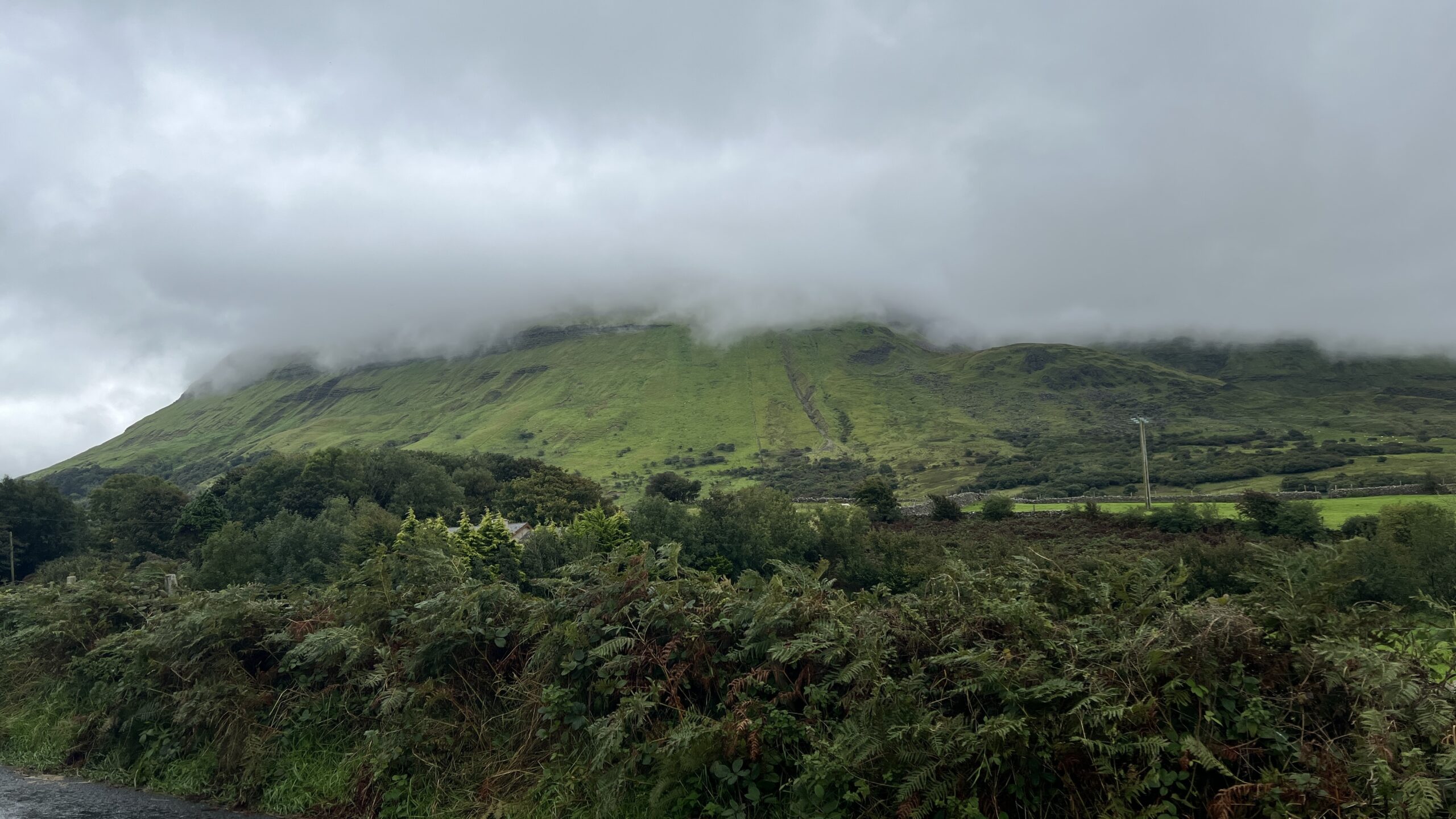
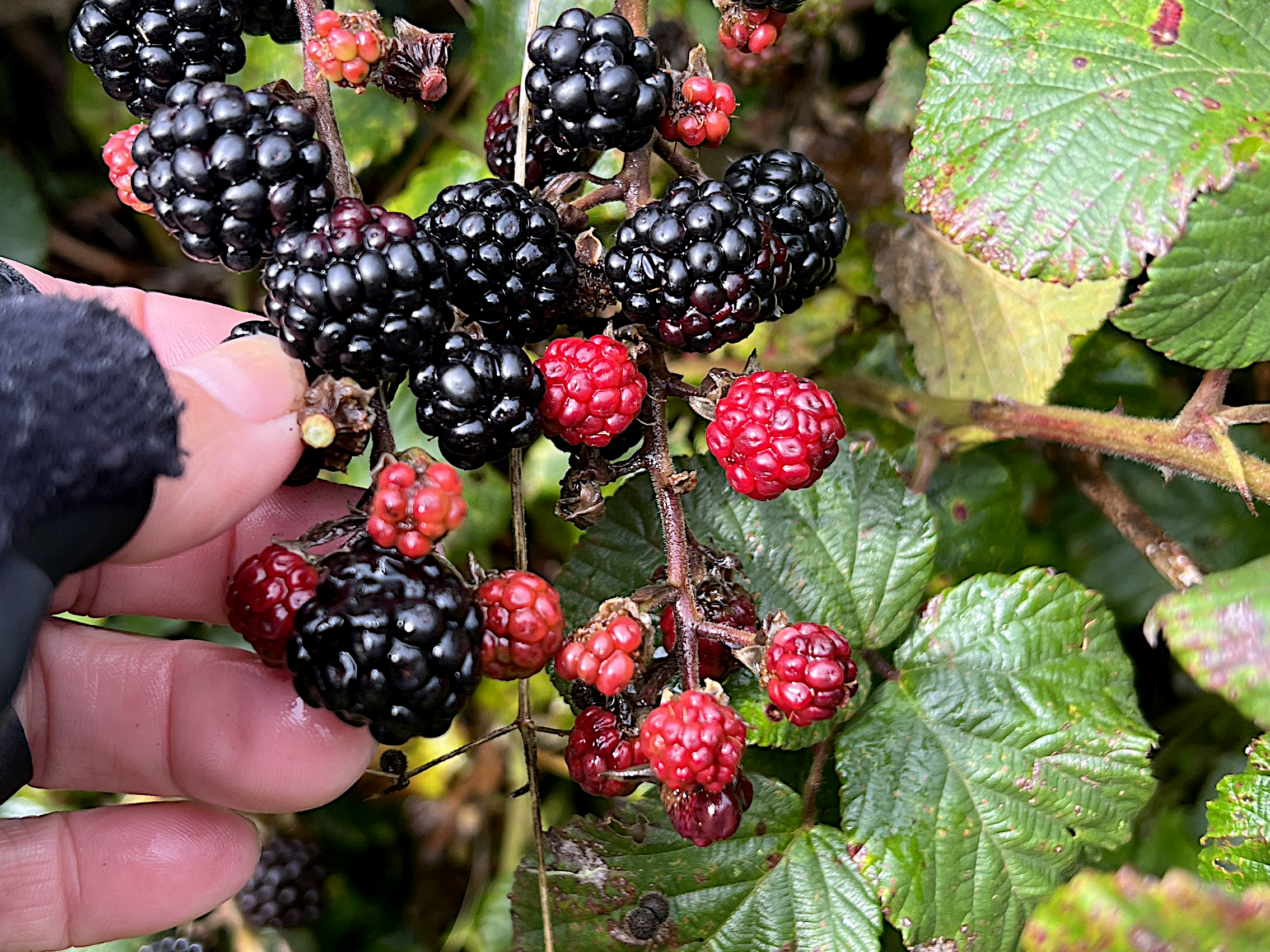
I packed my things and drove on, this time around the peninsula around Table Mountain. It wasn’t too windy anymore, but it was still raining. It’s unbelievable how much water accumulates up there. It has to stop sometime! There were blackberries here too, but they tasted more like rain than sun. No wonder.
Since I didn’t see any farmers, I went to a small campground near Donegal. I wasn’t particularly happy about that. I found a small spot on the meadow that wasn’t too swampy. Campgrounds are never as quiet as farms. There was a “kitchen,” but it was open and therefore cold.
Donegal was my northernmost point. From there, I rode across to Dublin. In the morning, I first visited the historic city. It was still raining on the way there, but later it stopped. I parked my bicycle at the tourist information. First, I found out what you have to see here and what the situation is with visas and controls in Northern Ireland.
Northern Ireland is part of Great Britain. Since April 2025, EU citizens need a visa to enter, which I don’t have, of course. There are no border controls on the island. Citizens of the Republic of Ireland are allowed to enter Northern Ireland without a visa. And me? What if I just want to pass through for a few hours? Until now, I had been told that no one checks. Here, at the official office, I was advised that tourists should have a visa. It’s true that no one really checks, and no one calls the police right away. But it would be stupid if I had an accident.
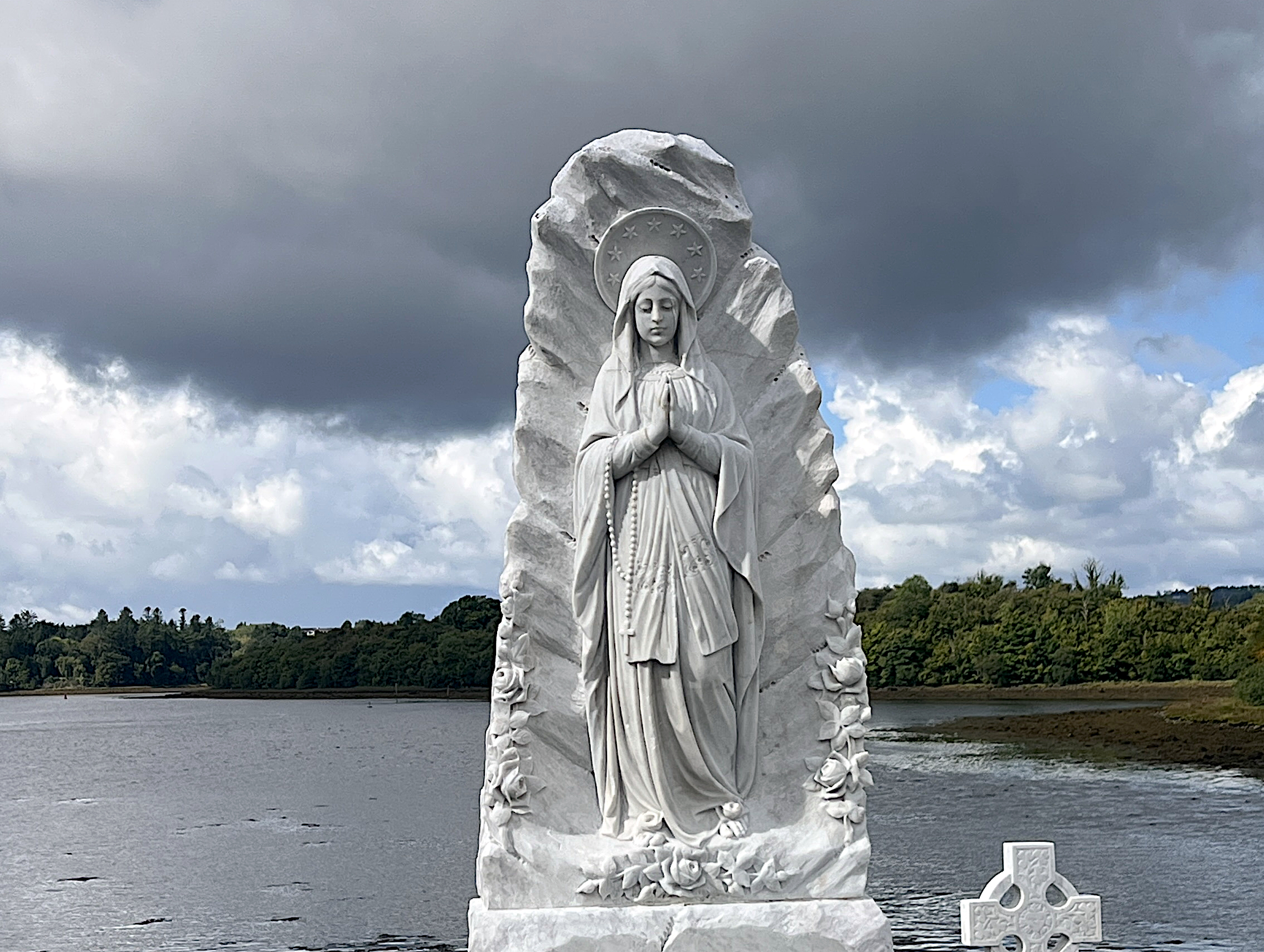
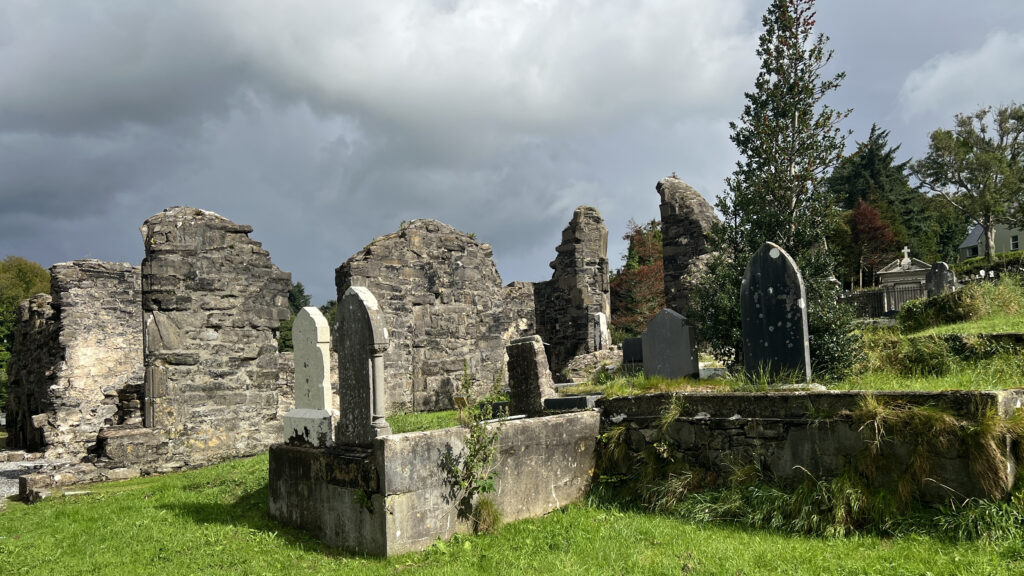
First, I visited Donegal: the ruins of the Franciscan monastery, beautifully situated by the sea, even though only a few walls remain.
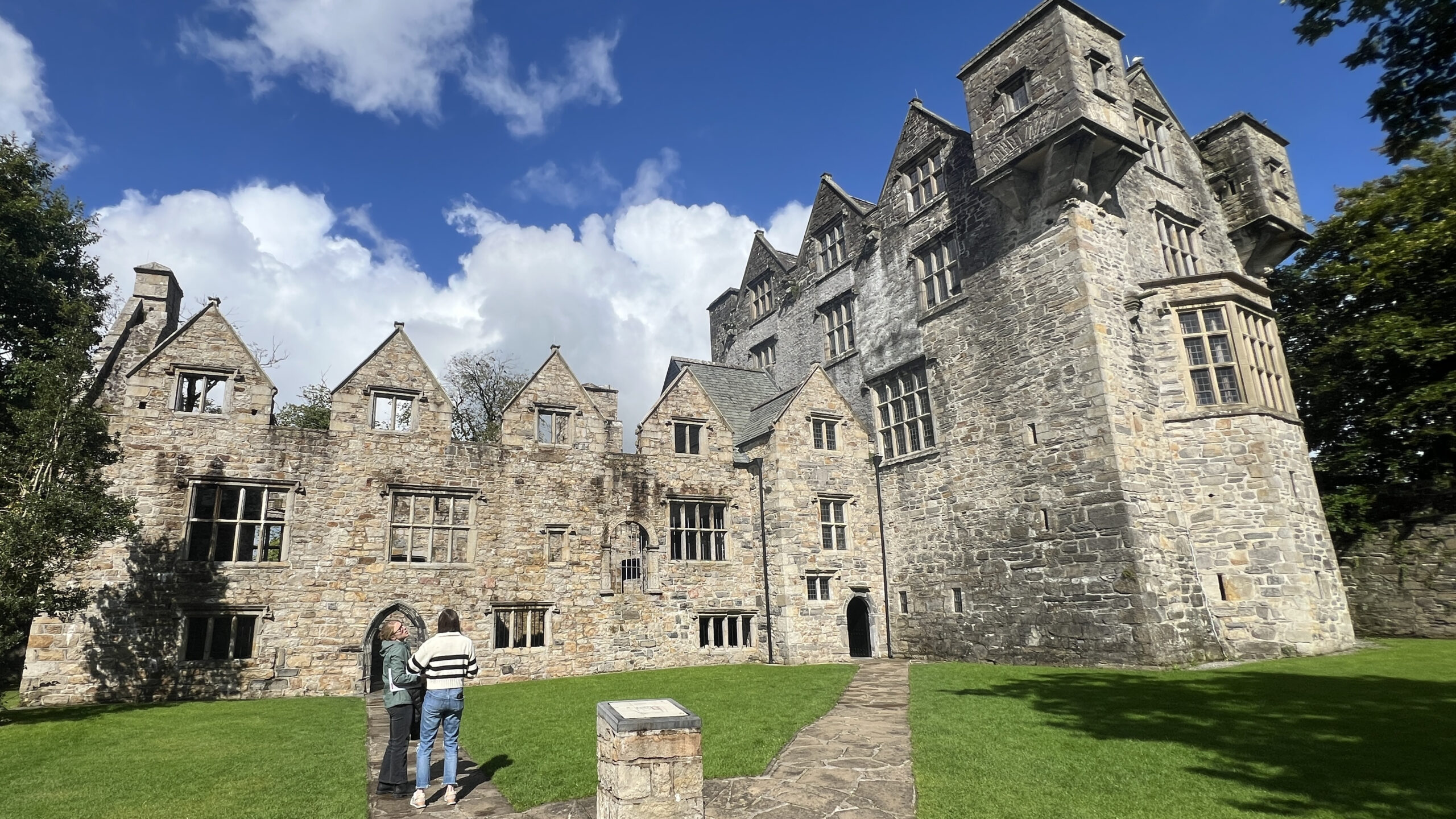
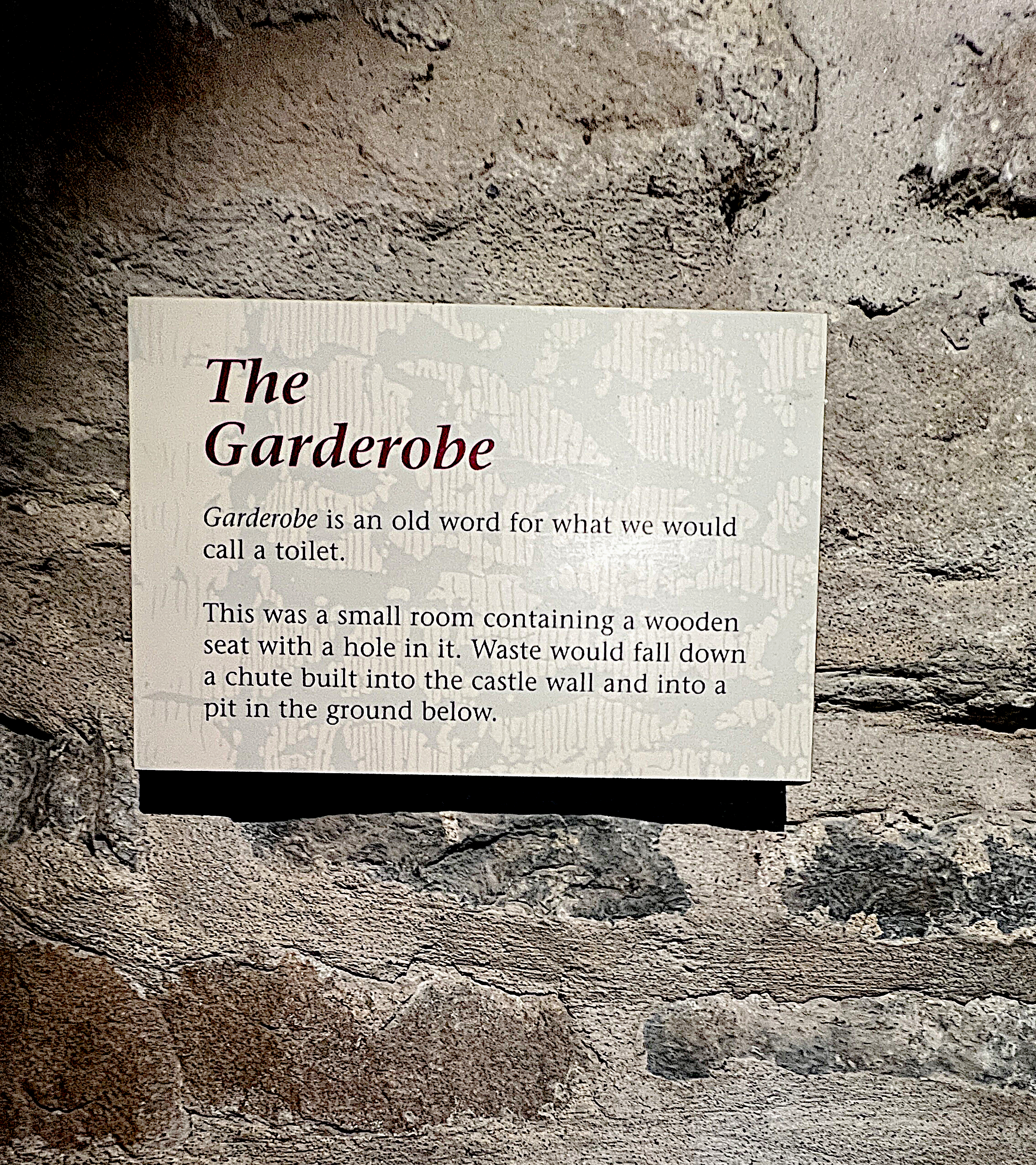
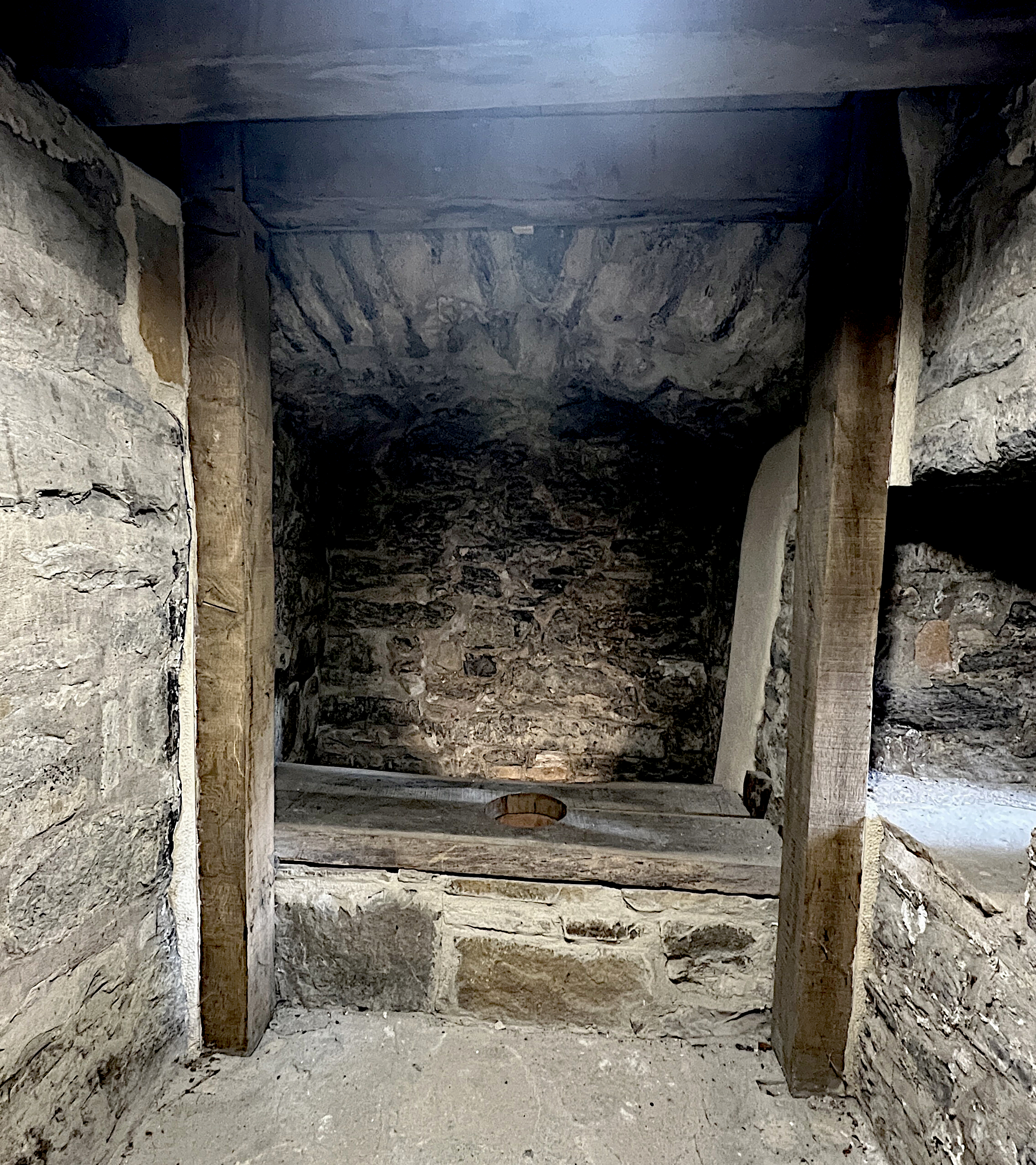
The castle was partially rebuilt in 1990 and is now a museum. Then I continued on my way. Getting out of the city and into nature goes very quickly in Ireland. I rode on over hills and pastures. Every now and then I passed a house, at first very elegant houses with large properties.
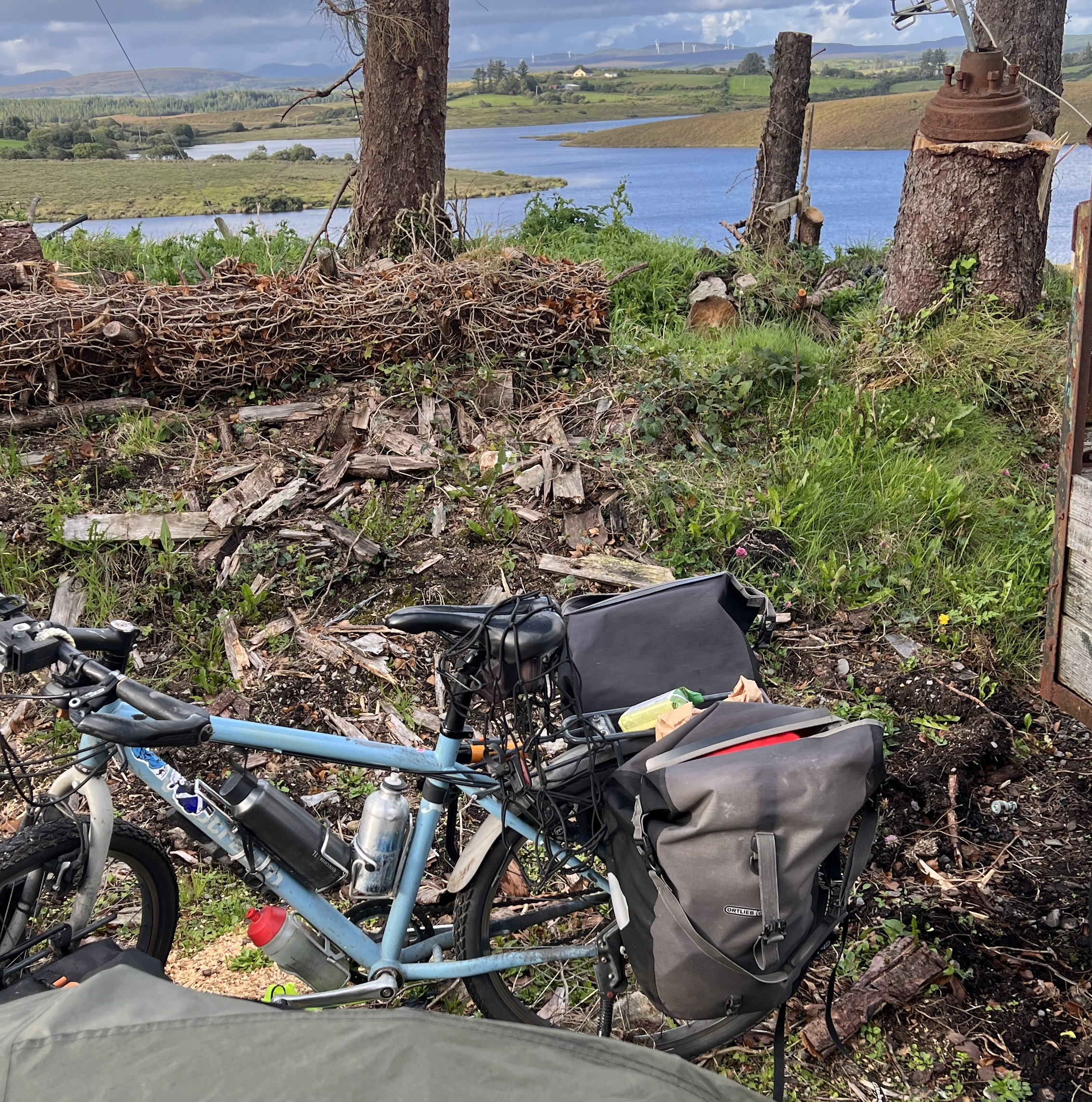
I couldn’t get past one owner who was cutting his hedge. Within a very short time, he told me his whole life story. However, he didn’t know where I could pitch my tent – even though he had a large garden 😉! It was still early, so I cycled on. I was getting closer and closer to the border with Northern Ireland. I didn’t want to camp wild there. It was wonderfully quiet along the border. There was nothing going on at all. Finally, I was able to camp at a lonely farmhouse on a hill with a great view. There had been a severe storm here in January/February 2025. On the way, I had seen trees that had been knocked over again and again. Here, they had to cut down two trees. I slept softly on sawdust.
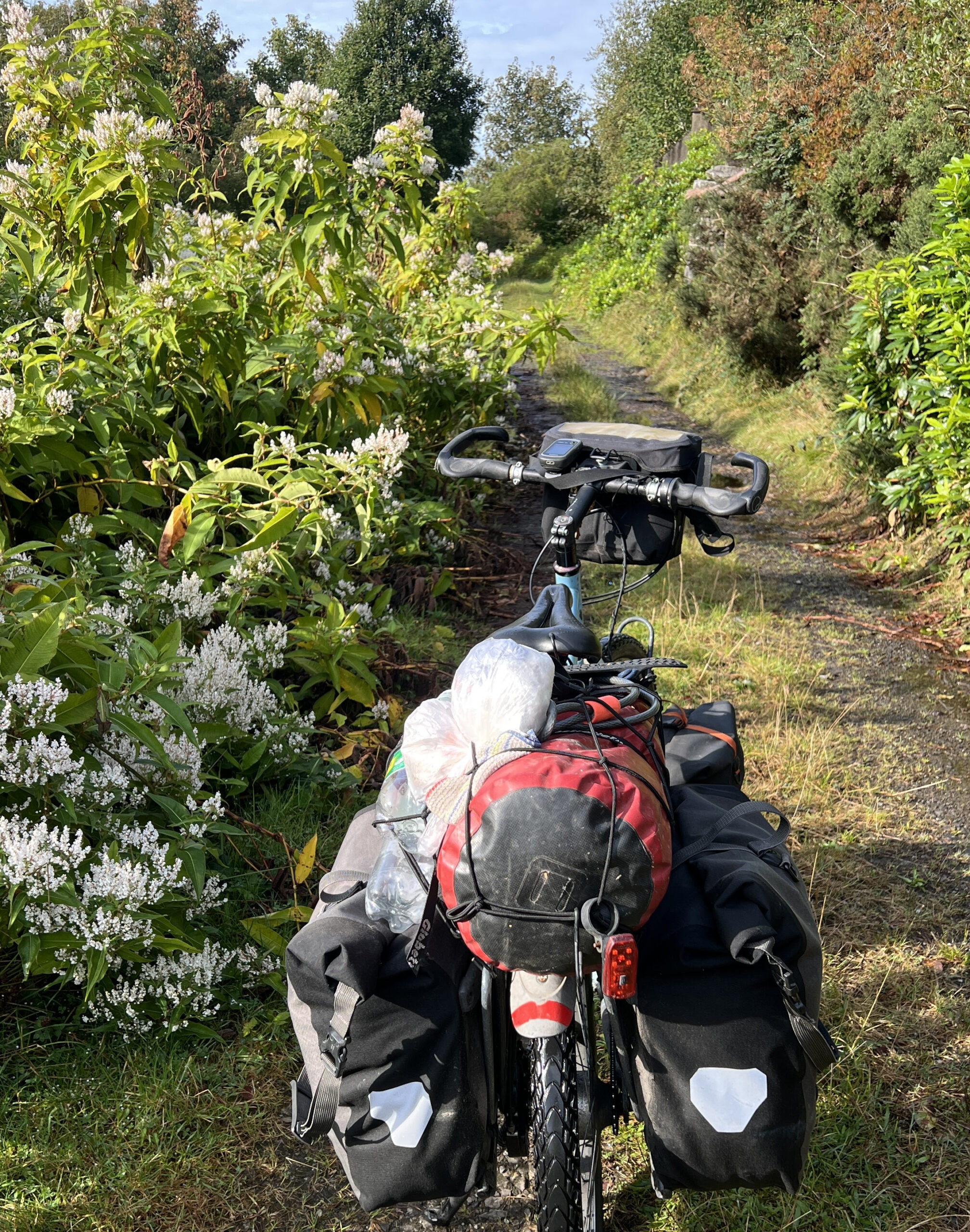
Then came the most wonderful stretch of track in Ireland: a gravel path through flowering bushes and pastures. Not another soul in sight.
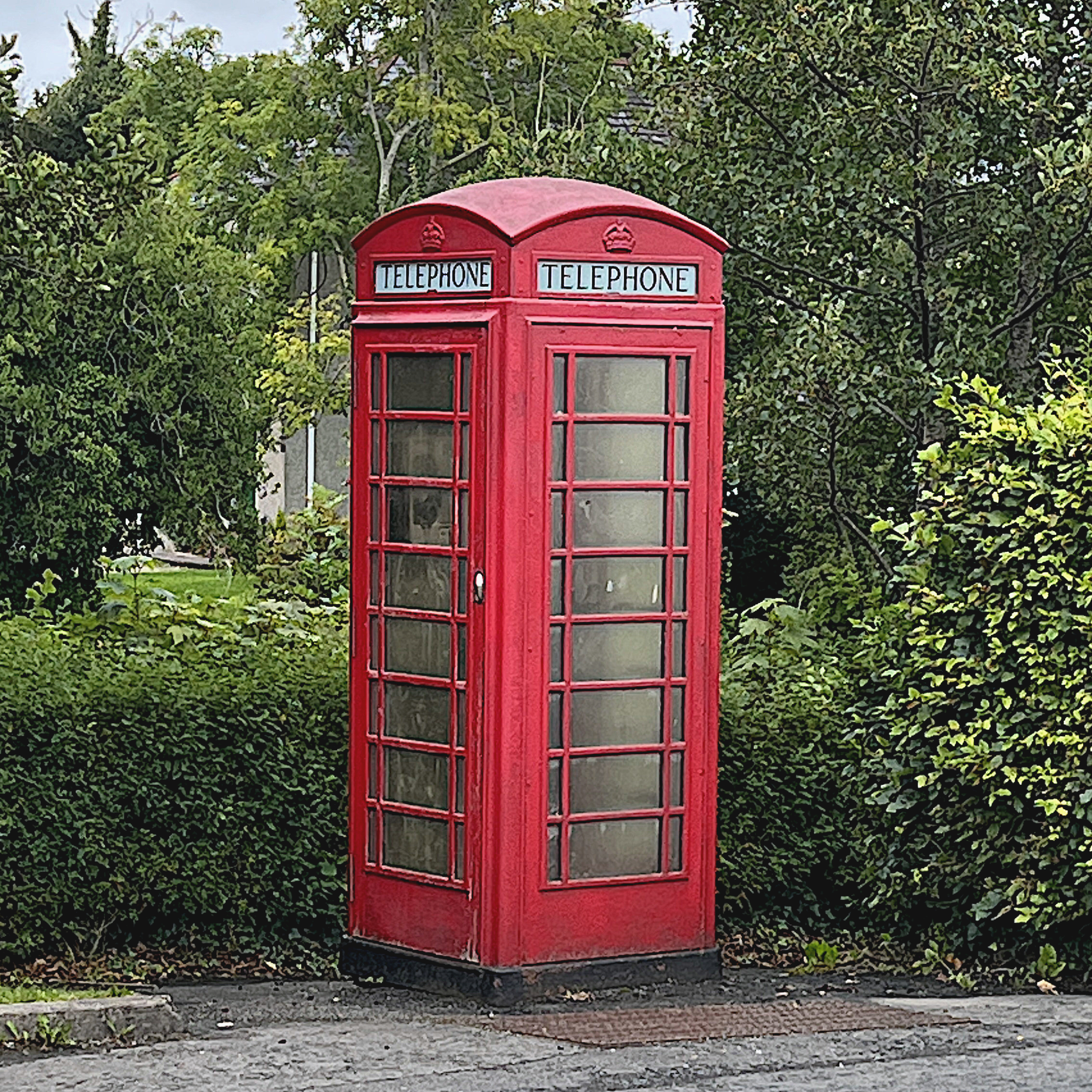
Then I headed down to Northern Ireland. I could only see where the border was on my GPS. Otherwise, there were no signs. At first glance, I didn’t see any differences. But later I did: the road signs had no Irish on them, distances were given in miles, and the phone booths were red instead of green like in the Republic. After Lough Melvin (lake), it got rather boring. At the next opportunity, I turned back into the Republic of Ireland.
Here I was back on very small roads. An elderly couple was busy at a lonely farmhouse: she was cleaning, he was mowing the lawn with a chainsaw. The usual small talk ensued. “How far do you want to go?” – “Not far, if you have a place for my tent, that’s fine with me.” After a brief discussion, I was allowed to camp in the pasture next door. I was warned about the deer.
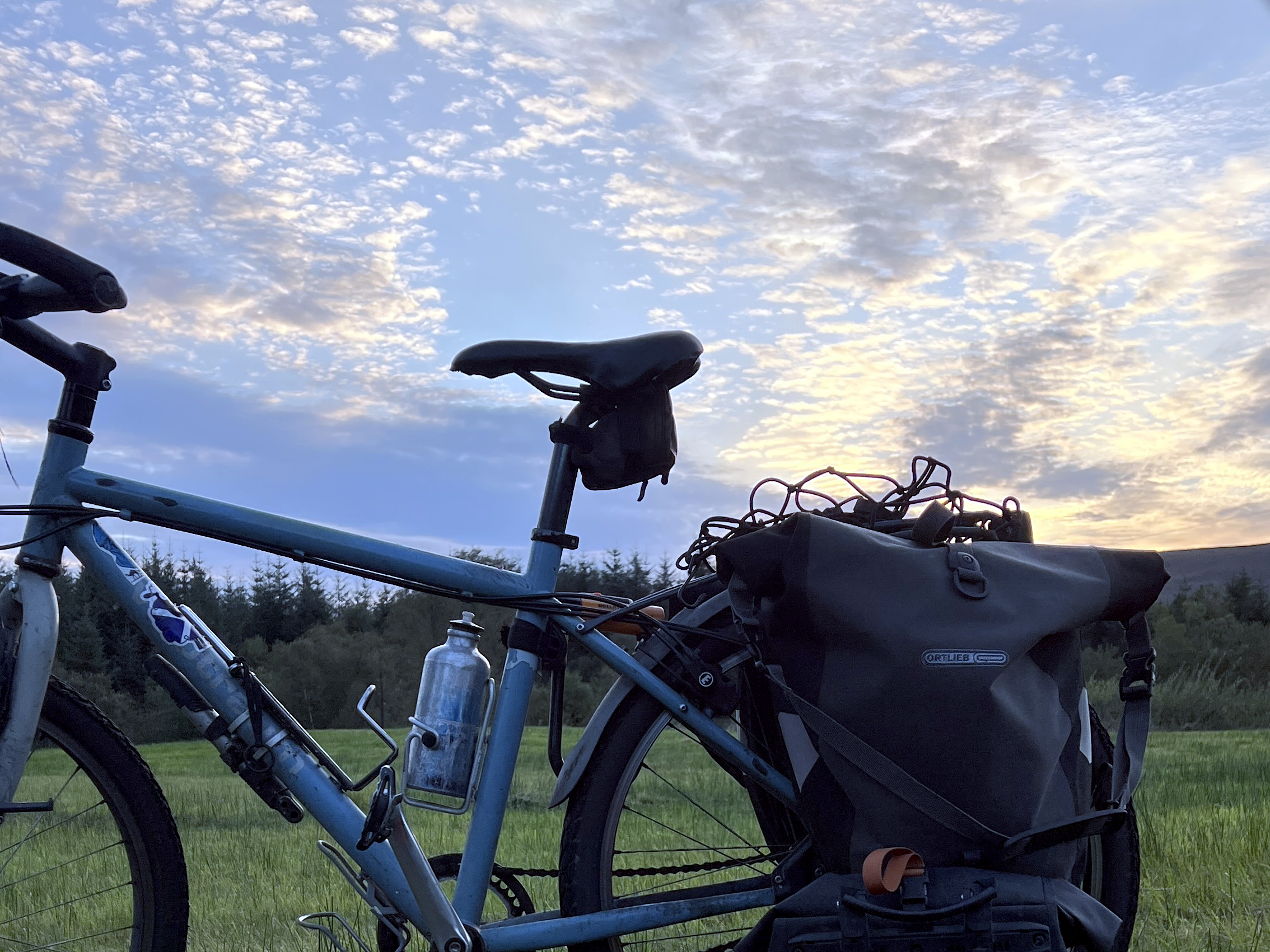
Because it was so early and it wasn’t raining, I was finally able to fix my bike. The next morning, I had just finished breakfast when the old farmer was already standing at the fence: “Would you like some more tea?” – “I just had breakfast.” – “Really?” – Well, okay, why not, I have time. Now his daughter, who was about 30 years old, was there too. It was fun and very interesting. She mainly works from home, but has to go into the office from time to time. “At least you don’t get stuck in traffic here,” I said. “Only the sheep get in the way sometimes,” she replied. When the storm hit in January/February, they had no electricity for a week. And the nearest pub is more than 10 kilometers away.
The last few days: Dublin and farewell
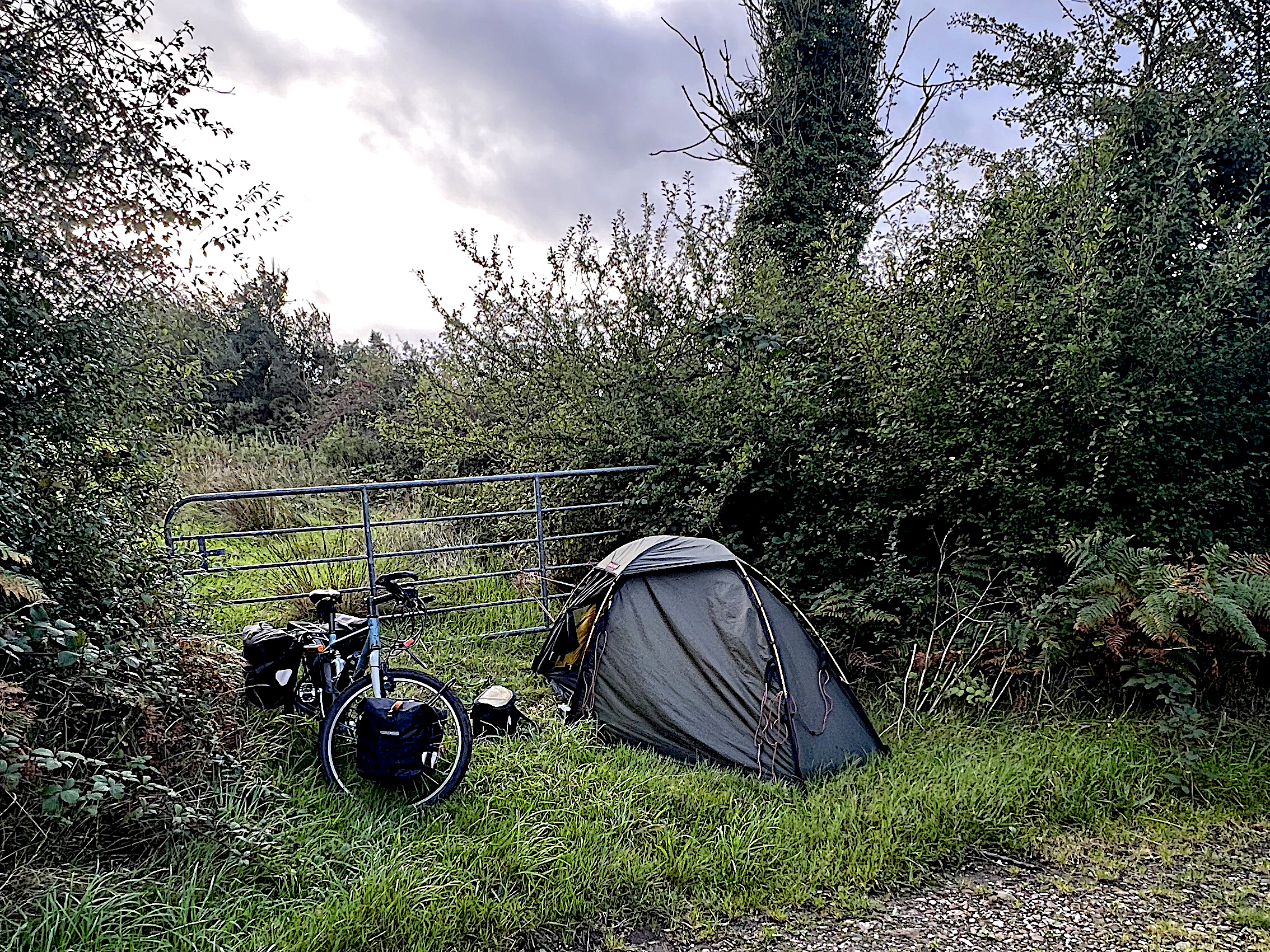
Rested and refreshed, I continued on my way. My last days in Ireland were dawning. I returned to areas with more population and fewer mountains. But it was still very green. The pastures often had walls and hedges around them, so I was able to camp wild again in a well-protected spot.
After all the rain, I was very happy to be staying with friends near Collinstown for two nights. On days like these, I get really lazy and have to force myself to at least explore the area a little.
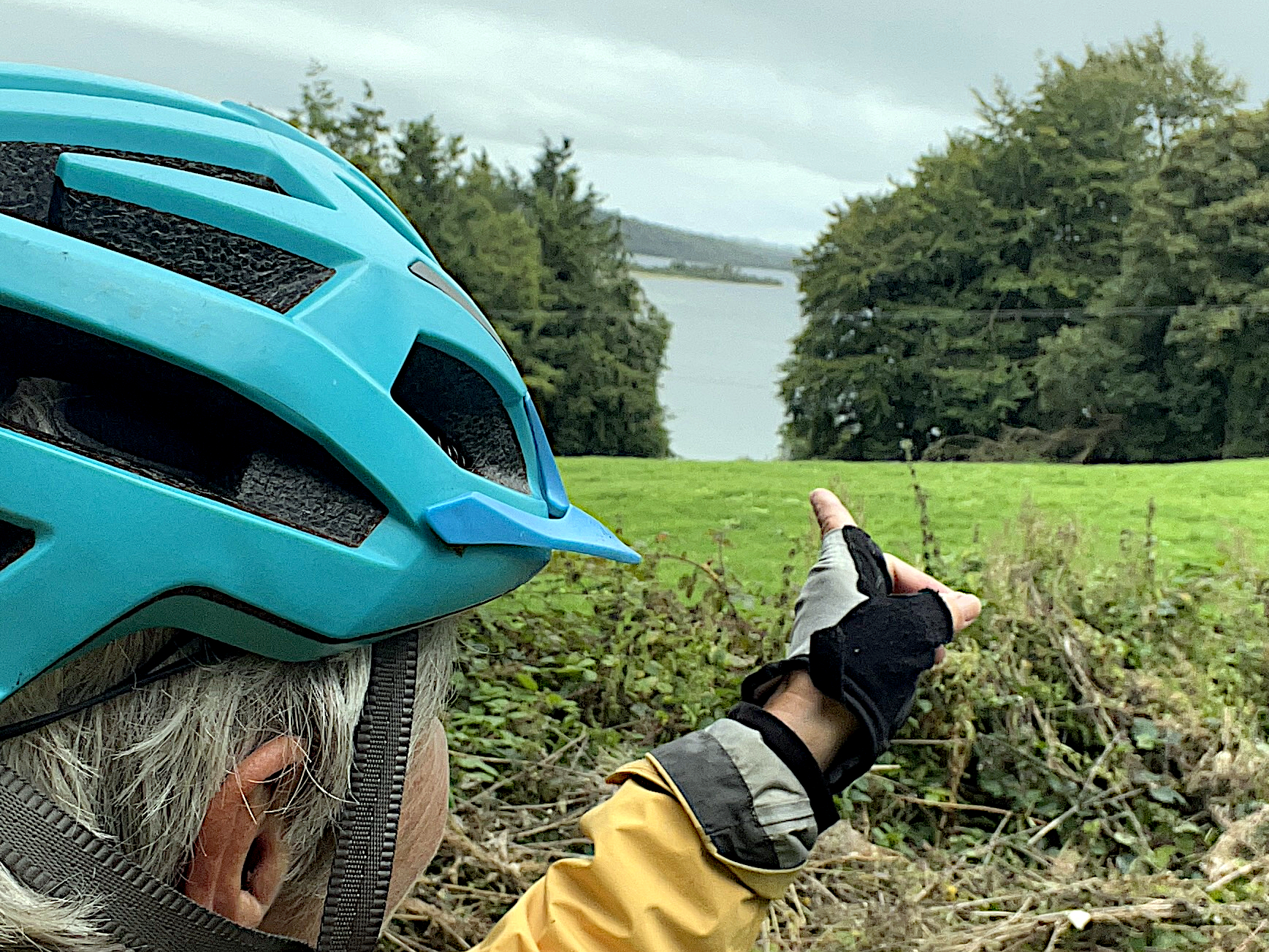
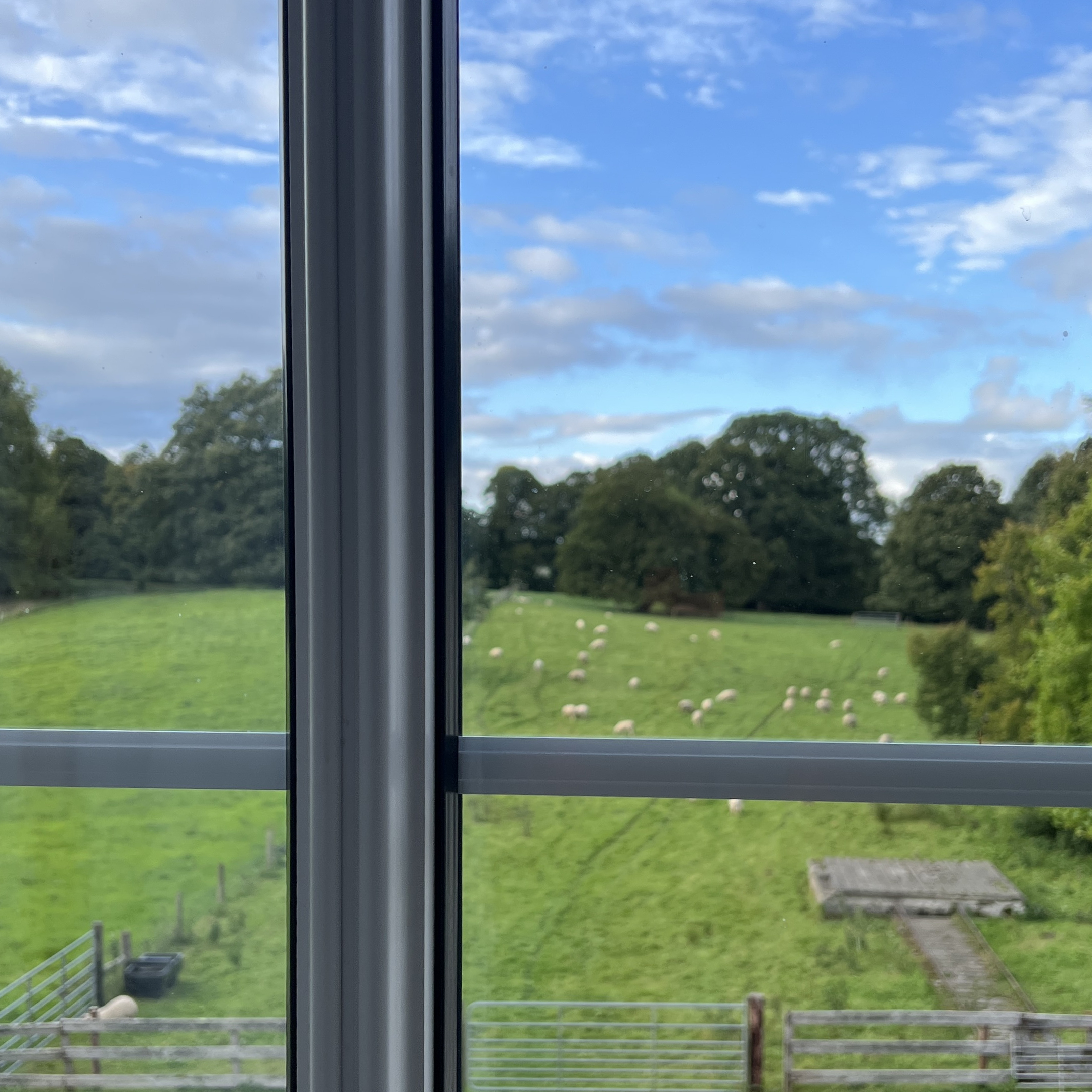
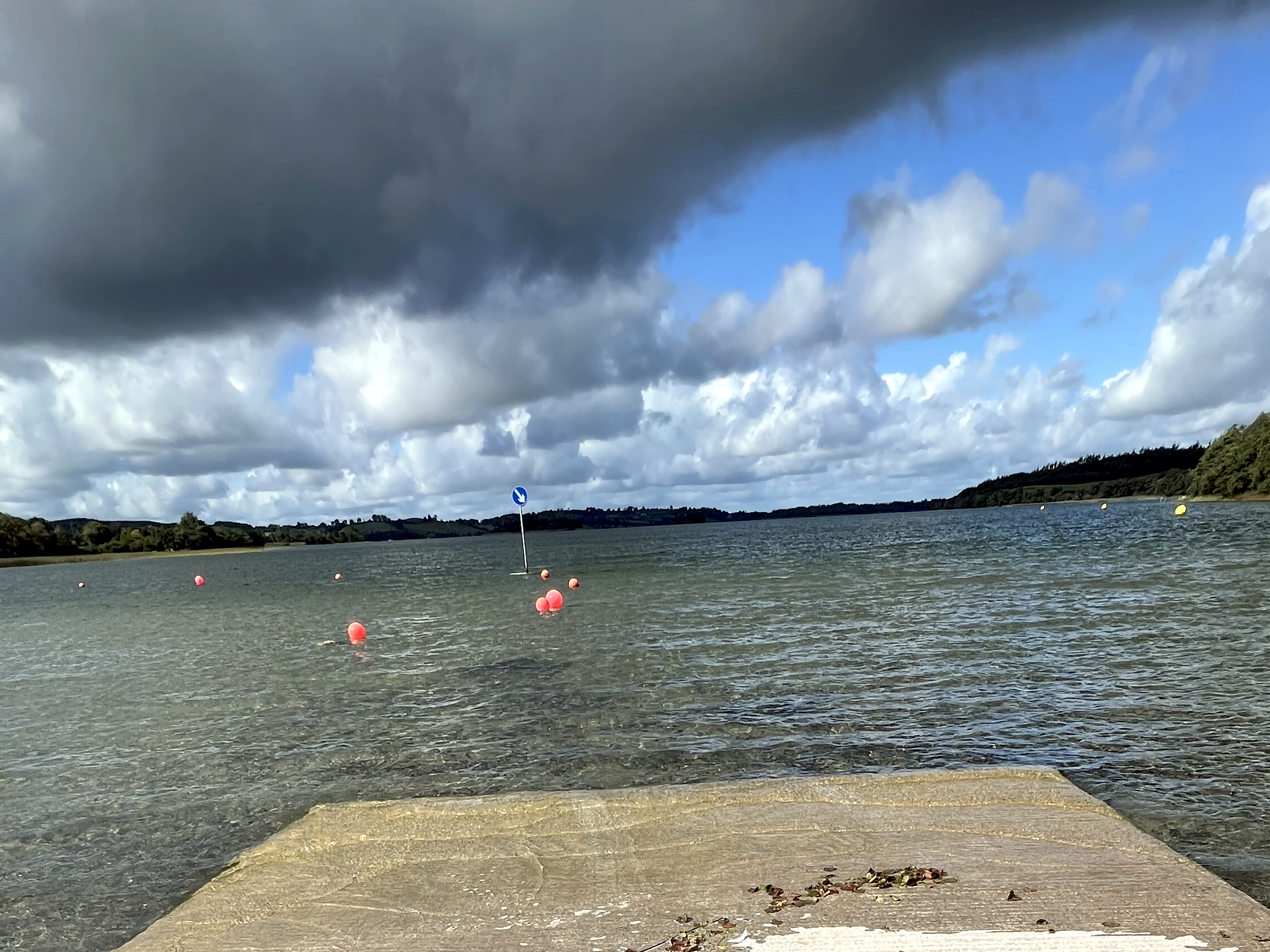
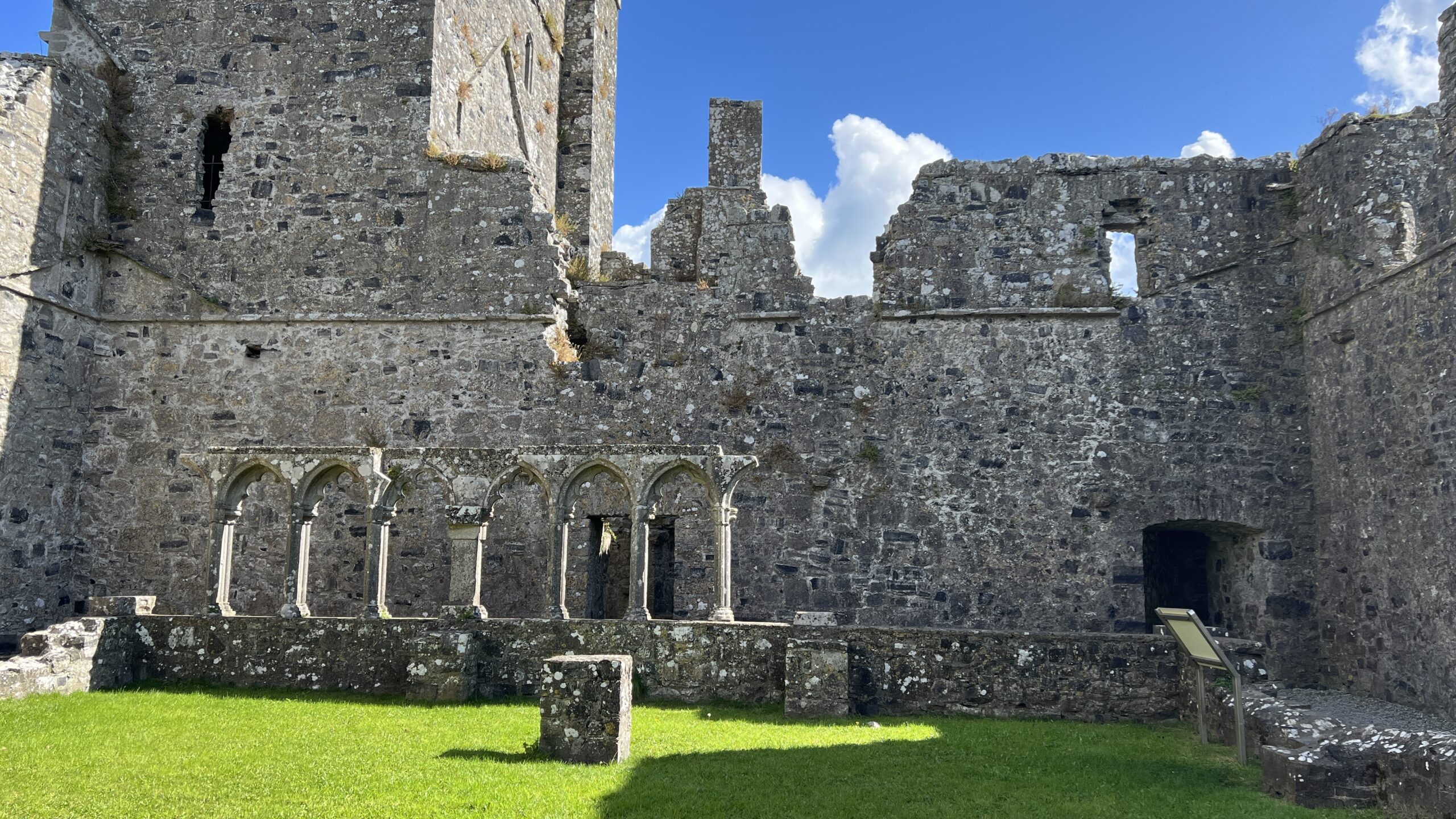
The trip to Dublin was mostly on the bike path along the Royal Canal. It wasn’t like the other bike paths on old railroad tracks—there was more going on here.
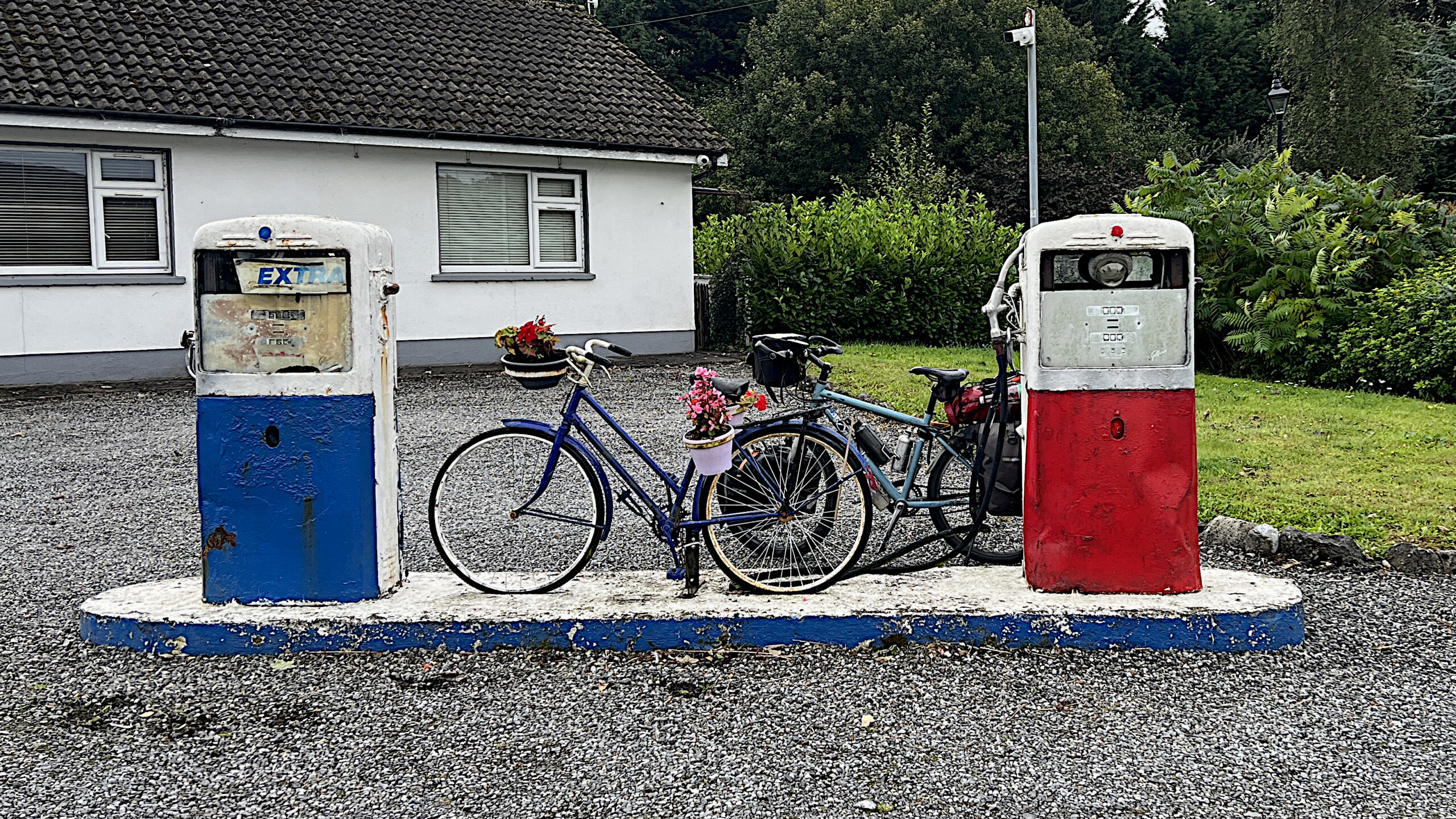
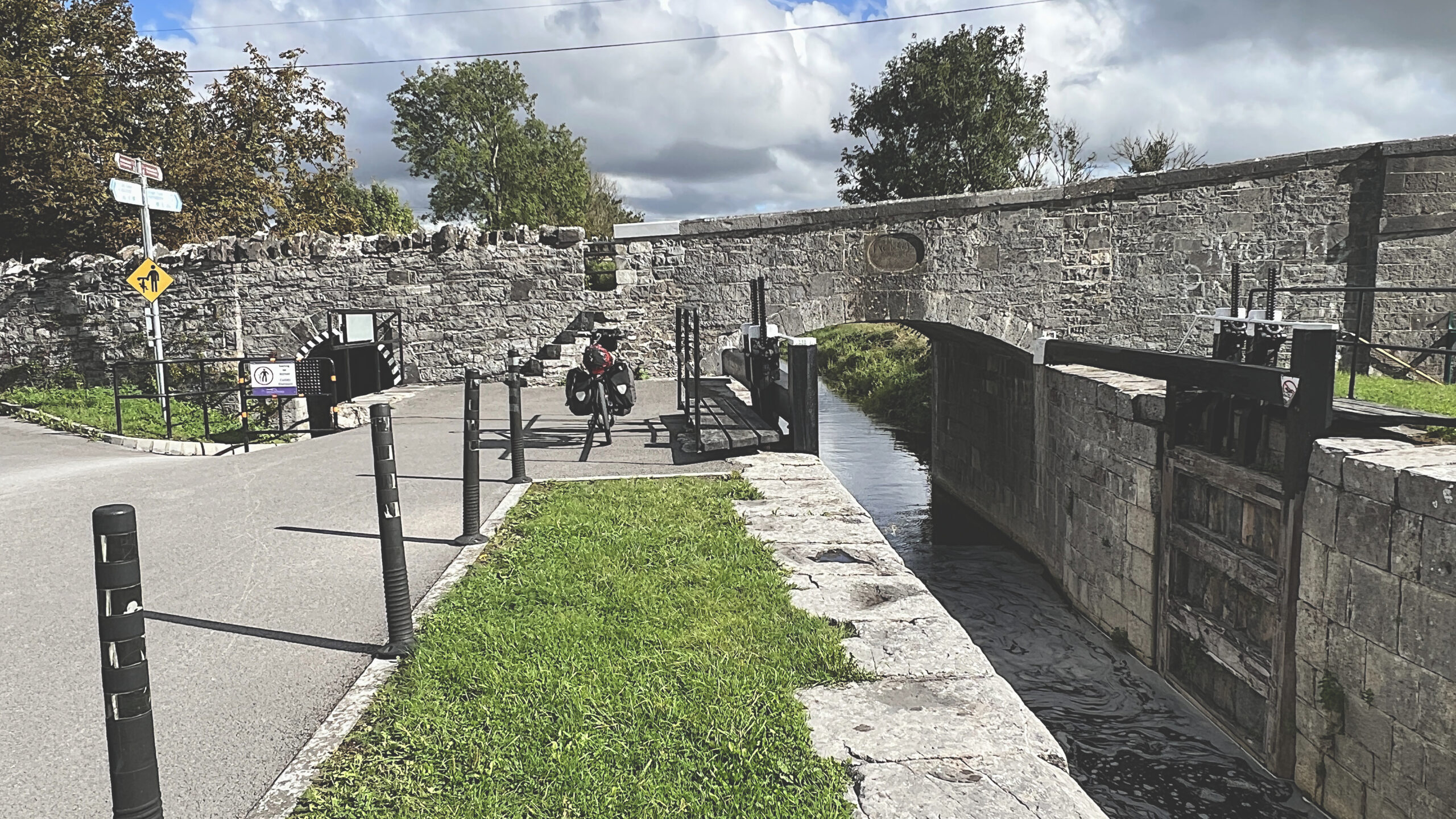
But I had strong headwinds. The last stretch in the city was a challenge. I wasn’t used to so much traffic anymore. Much later than planned, I arrived at Michelle’s place, a cyclist I had met in Leipzig in the spring. We had another very entertaining evening..
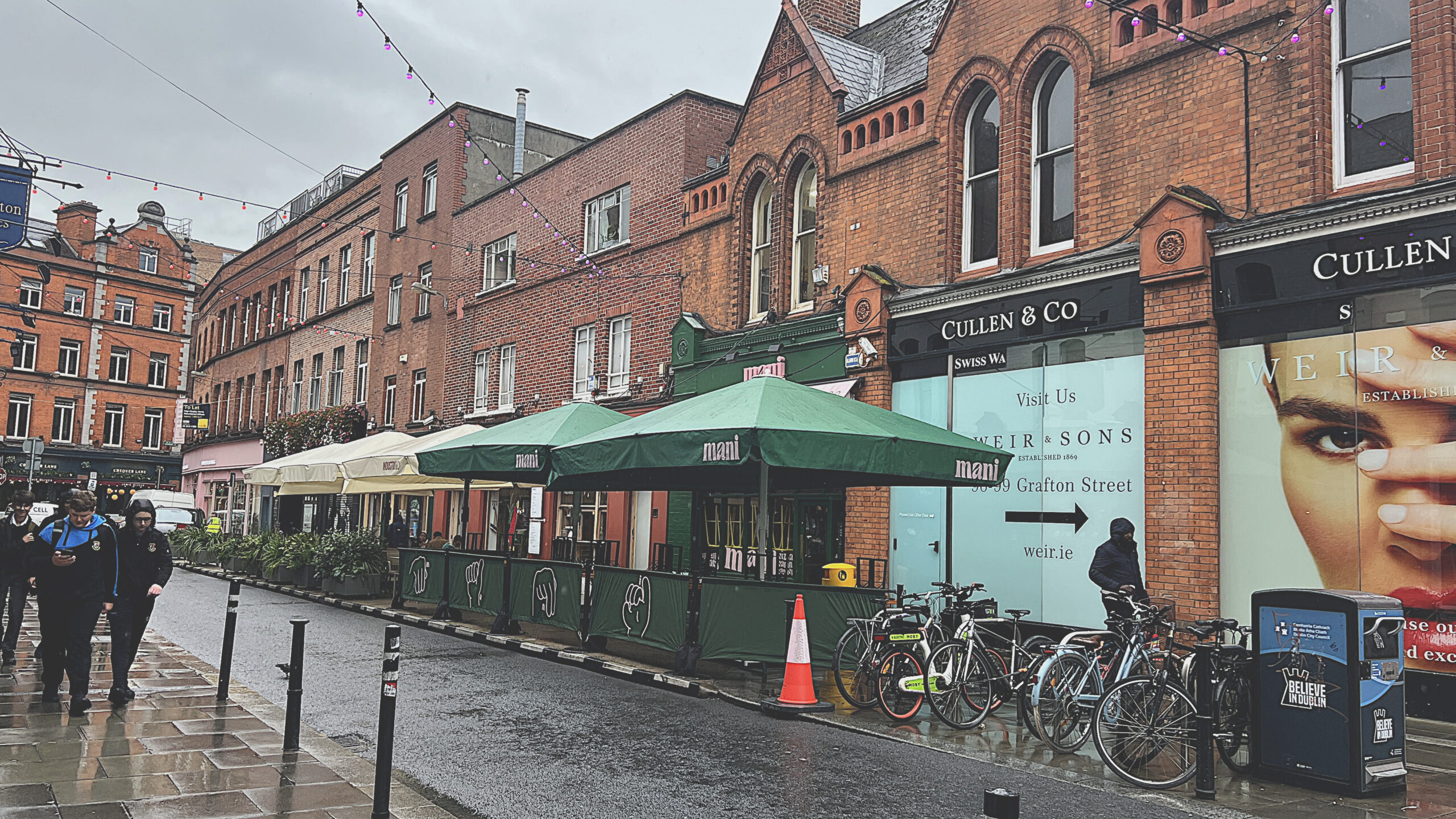
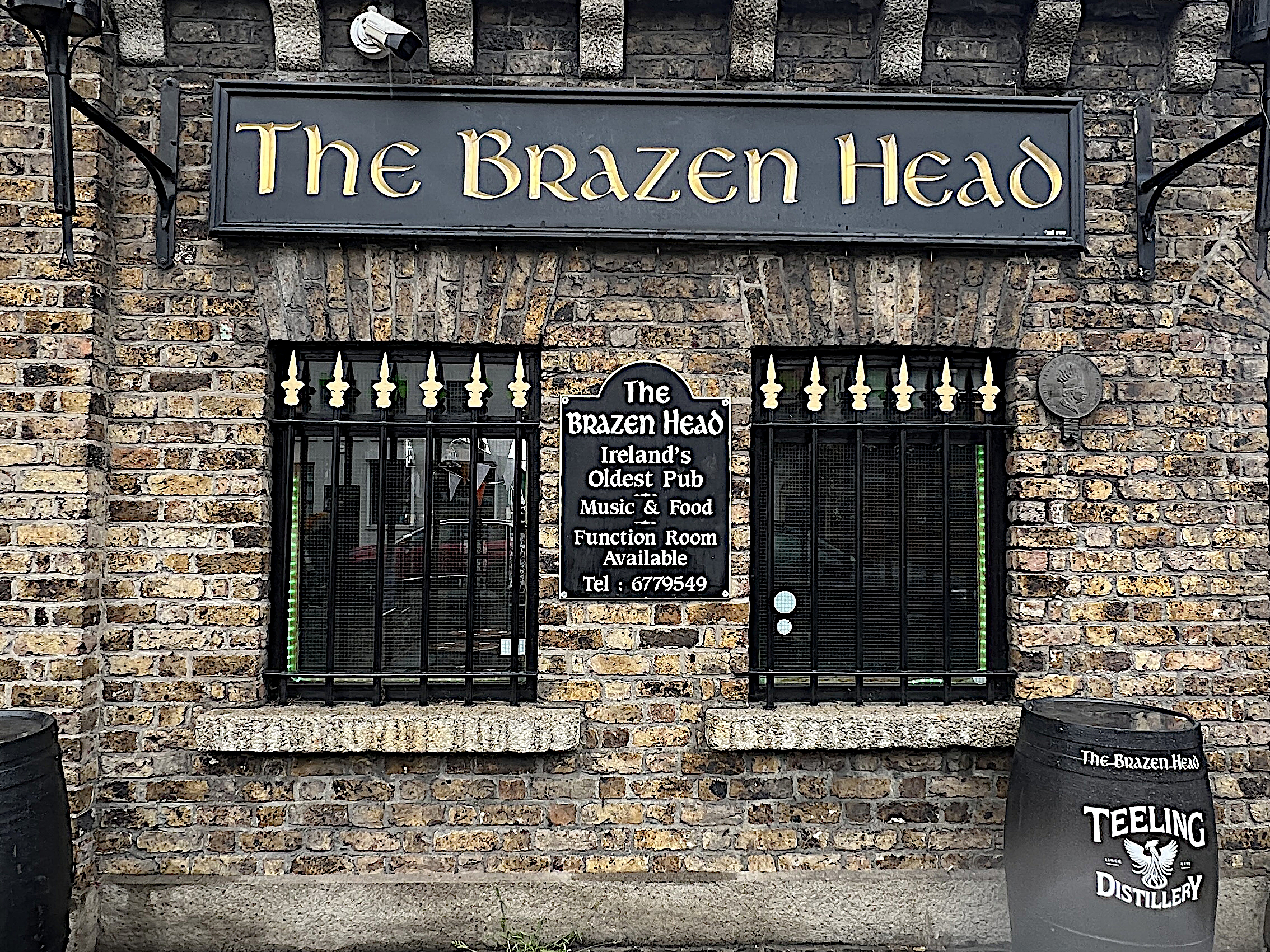
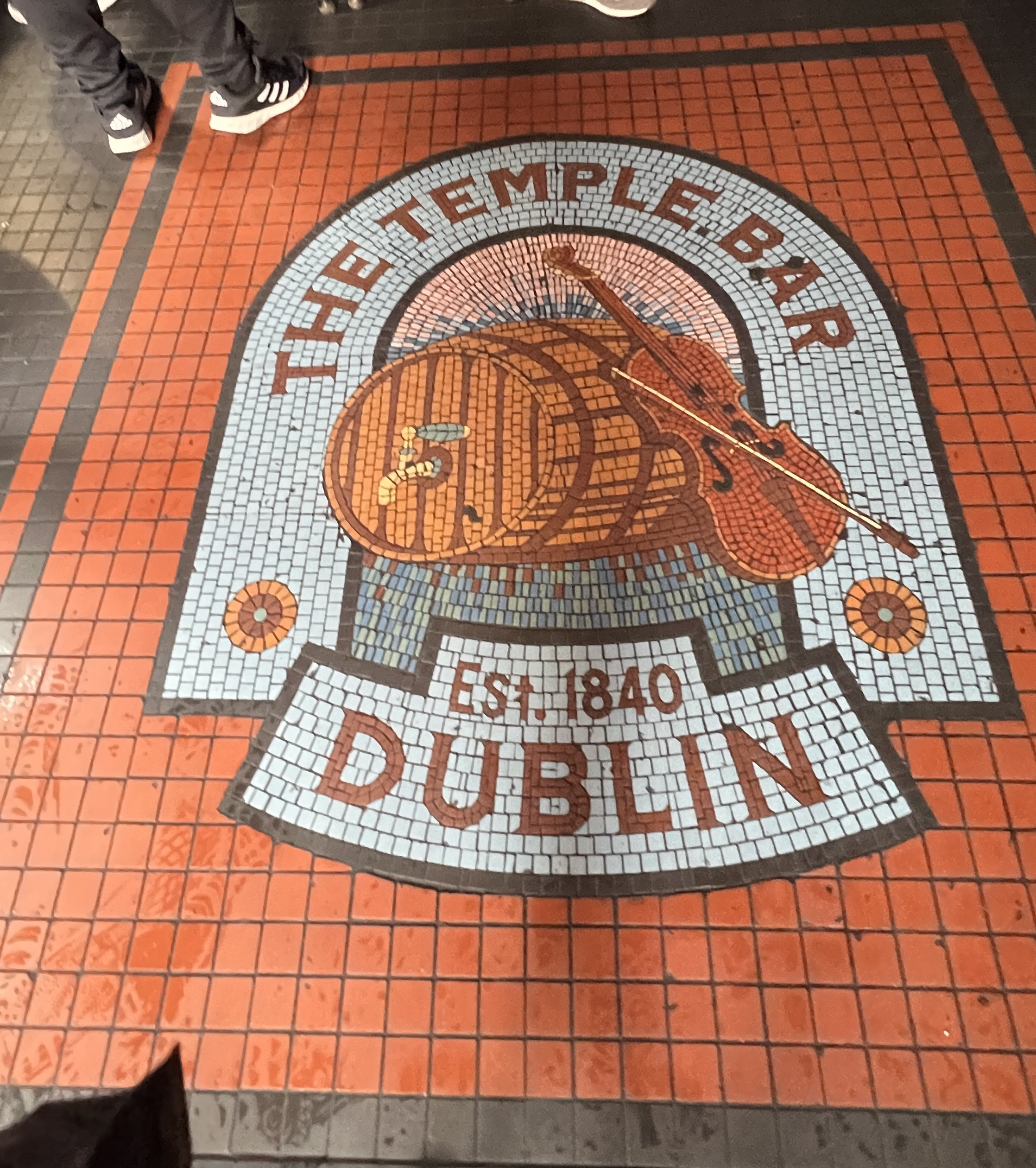
While she was working, I explored the city. There is a free parking facility for bicycles , which is very convenient. I was right in the middle of the city. Unfortunately, it rained on and off here too. In the afternoon, I said goodbye to Michelle and cycled to my next invitation, to John, whom I had met on the Ring of Kerry. Another evening of interesting conversations about the world and travel.
The next day was my last in Ireland. I just had to get to the ferry terminal. Luckily, it didn’t start raining until I was almost there. As usual, I arrived way too early – but at least I was almost dry.
Good to know – tips for cyclists in Ireland
- Rain: Yes, it rains in Ireland. But with the right clothing and a dose of serenity, it’s easy to cope with. And after the rain, there’s often a breathtaking rainbow!
- Hospitality: Irish warmth makes up for any weather. Whether farmers, gas station owners, or chance encounters—people are open, helpful, and full of stories.
- Bike paths: You don’t have to stay on the official Greenways or EuroVelo 1. It’s often off the beaten track that you’ll find the most beautiful, secluded, and authentic routes.
- Blackberries: They actually taste better when they’ve been exposed to the sun – and not just rain.
- Coffee: Almost every gas station and supermarket has coffee – and often a little conversation on top.
- Historic sites: Discover castles, monasteries, and ruins.
In total, I spent 27 days in Ireland and cycled1,686 kilometers.
What were your experiences on the Green Island? Or are you still dreaming of cycling through Ireland yourself? Do you have any questions, tips, or stories of your own? I look forward to your comments! ☘️🚴♀️
